
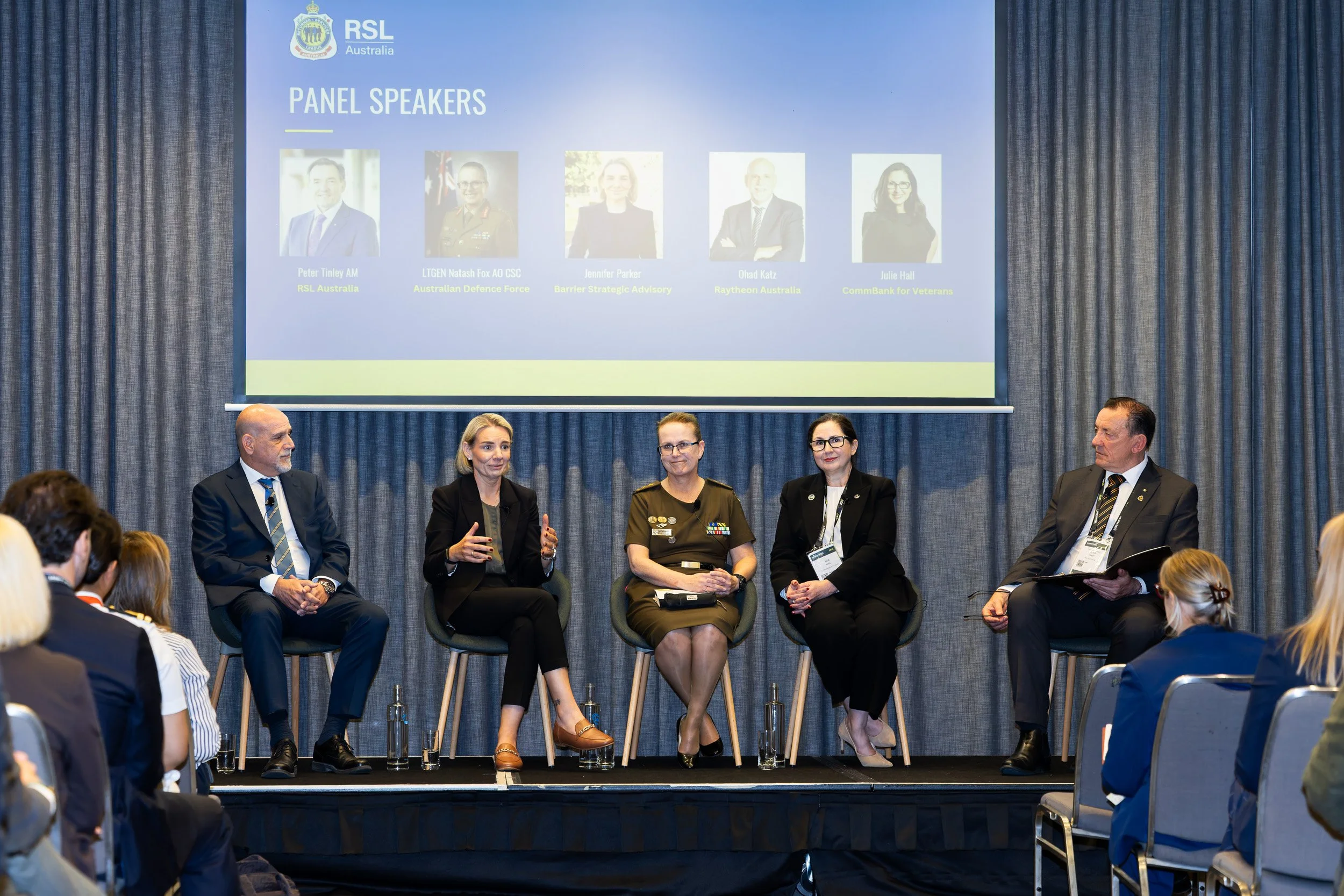

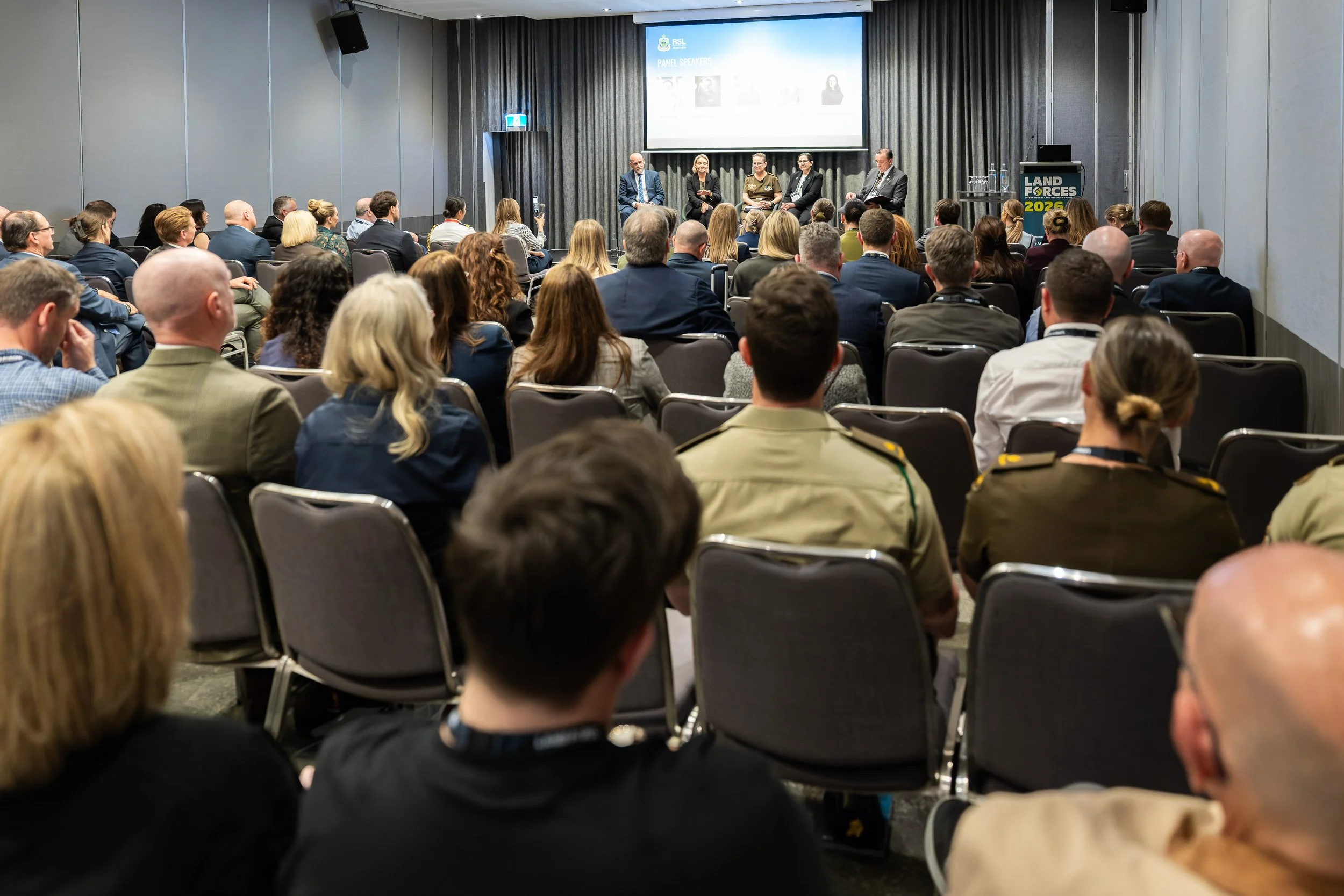
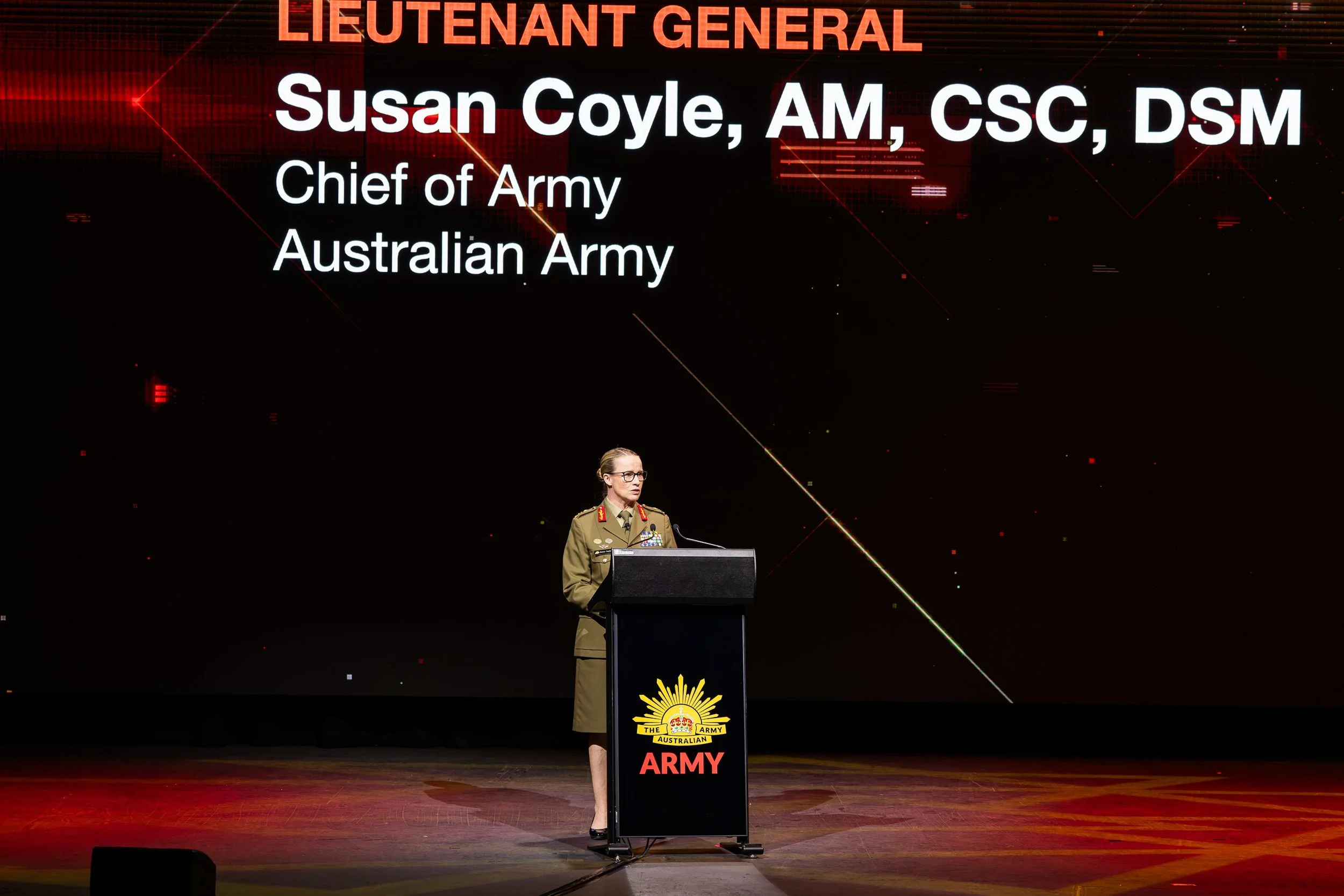
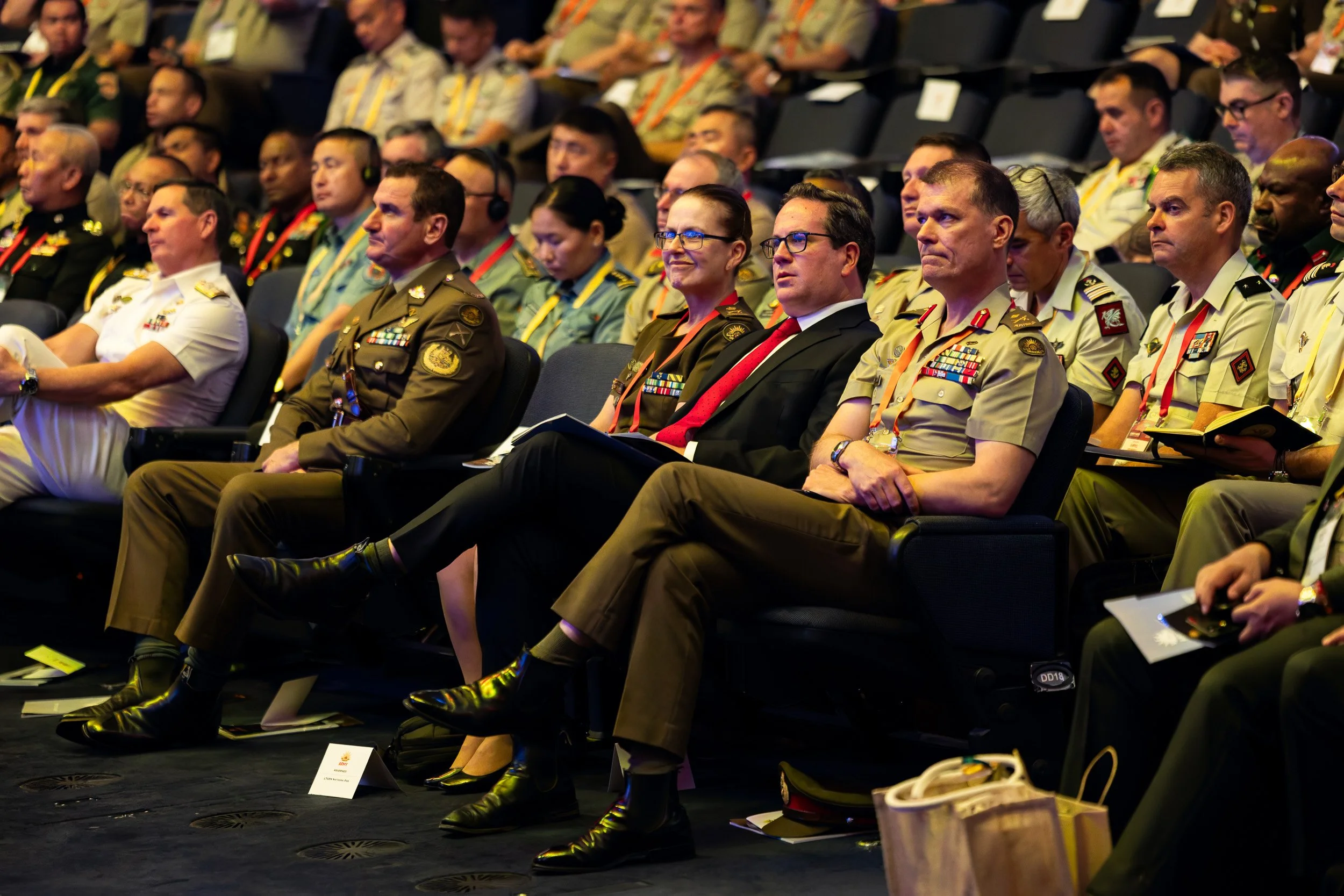
The critical role of veterans in Australia's national defence capability, workforce and broader community was in the spotlight at an RSL Australia panel discussion at Land Forces 2026 in Perth.
Moderated by RSL Australia National President Peter Tinley AM, the discussion brought together senior Defence, industry and academic leaders to explore how Australia can better recognise and harness the skills of veterans, strengthen Defence workforce capability and prepare for future national security challenges.
Joining Mr Tinley were Lieutenant General Natasha Fox AO CSC, Chief of Personnel, Australian Defence Force; Jennifer Parker, Adjunct Professor at the University of Western Australia's Defence and Security Institute; Ohad Katz, Managing Director of Raytheon Australia; and Julie Hall, Senior Manager of CommBank for Veterans.
Changing the narrative around veterans
A central theme was the need to shift public perceptions of veterans beyond vulnerability and support needs, to recognise their significant contribution to Australian society.
Mr Tinley challenged the perception that veterans represent a potential liability for employers, highlighting the leadership, resilience, teamwork and problem-solving skills developed through military service.
While acknowledging the importance of supporting vulnerable veterans, he emphasised that the broader veteran community represents an enormous national resource.
Ms Parker echoed this sentiment, calling for greater recognition of veterans as capable, skilled contributors to industry and society.
Mr Katz highlighted the value of military experience to defence industry, noting that veterans make up approximately 25 per cent of Raytheon Australia's workforce.
He said their operational knowledge, leadership and understanding of Defence requirements are invaluable to the business.
Strengthening Australia's Defence workforce
Lieutenant General Fox outlined encouraging improvements in ADF recruitment and retention, with more than 8,100 enlistments in the past financial year – the strongest recruitment result in 16 years.
Almost 74,000 Australians applied to join the ADF, while the separation rate fell to 7.4 per cent, its lowest level in 15 years.
She attributed the improvements to modernised recruitment campaigns, regional engagement and the removal of outdated barriers to service.
However, the panel acknowledged that sustaining workforce growth, improving recruitment processes and strengthening Australia's Reserve capability remain significant challenges.
Ms Parker called for a rethink of Australia's Reserve structure to ensure the nation can mobilise personnel effectively in response to future security threats.
Unlocking opportunities beyond service
The discussion also explored the importance of supporting veterans as they transition into civilian employment and business ownership.
Ms Hall shared the success of CommBank for Veterans, which has supported more than 400 veteran entrepreneurs over four years through dedicated banking services, financial education and mentoring.
Panel members agreed that employing veterans should not be viewed as an act of charity, but as an opportunity for businesses to benefit from valuable skills and experience.
The importance of supporting Defence families, including employment opportunities for military spouses, was also highlighted.
A whole-of-nation approach to defence
Looking ahead, the panel emphasised that Australia's national security depends on more than military platforms and equipment.
Mr Tinley highlighted the importance of national resilience, community cohesion and public trust, while Ms Parker called for clearer communication about Australia's changing strategic environment.
The discussion reinforced the need for closer cooperation between Defence, government, industry, veterans and the broader community.
For RSL Australia, the message was clear: veterans have an important role to play not only during their military service, but throughout their lives.
Recognising their contribution, creating opportunities and ensuring their skills remain part of Australia's national capability will be essential to building a stronger, more resilient nation.