
#Still Serving
Telling the stories of veterans who are contributing to this country in ways that never make the news.
The uniform comes off. The capability doesn’t. When someone leaves the military, the skills they developed, the discipline they built, and the instinct to show up for others don’t disappear.
Veterans find their way into the places where those qualities are needed most — emergency services, law enforcement, border protection, cyber security, and community leadership.
The numbers bear it out.
17.8% of Australian veterans work in public administration and safety, compared to 6% of the general population — nearly three times as likely to be in roles that keep the rest of us safe.
Australia has more than 580,000 veterans. Many of those who once served in uniform are #StillServing across every sector, every region, and every community.
Many find the civilian expression of the same purpose that drew them to service in the first place. Veterans are embedded in the architecture of our sovereign capability — the nation’s ability to respond, protect, and endure.
But we don’t talk about it enough.
These are some of their stories.
Nominate a Veteran
If you know a veteran whose story deserves telling, someone building a business, running a fire brigade, teaching in a school, or leading in their community, we want to hear about them.
Rod Greedy
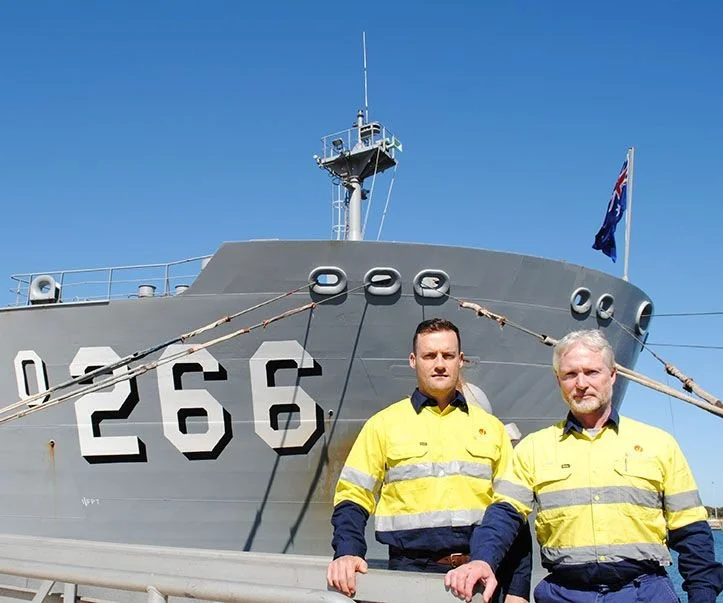
When Rod Greedy left the Australian Defence Force after 16 years, he didn't leave the mission behind. He built one.
Vescient is a Perth-based technology and advisory firm — 100 per cent veteran-owned, delivering cyber security, critical infrastructure, space, and Defence projects across Australia. Since 2016, Rod and his team have completed more than 270 projects, including over 50 for Federal and State Government. They sit on six government panels, including Defence ICT and the AFP Capability Support Services Panel.
Twenty-five people. Perth headquarters. Delivering work that matters to national security.
This is what sovereign capability actually looks like. Not a policy paper — a company. Built by a veteran who took 16 years of military discipline, engineering training, and operational leadership and turned it into a business that now supports the Defence Force he once served in.
Australia needs 30,000 cyber security workers by 2030. AUKUS alone requires 20,000 skilled workers over 30 years. Veterans are the people who build the infrastructure that keeps this country running.
The uniform comes off. The capability doesn't.
Mel Picton
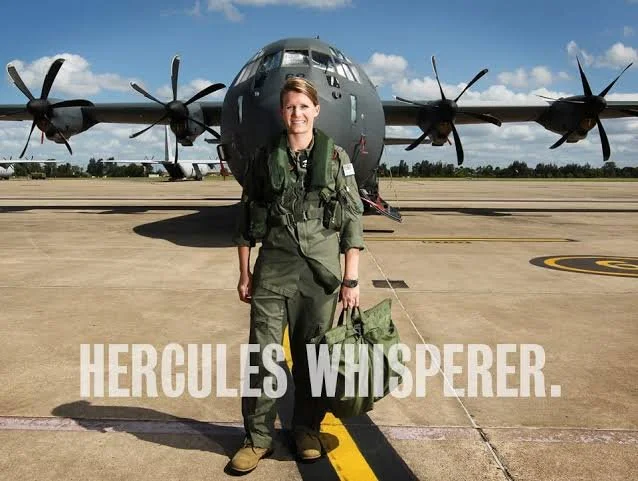
Mel Picton spent 17 years flying C-130J Hercules aircraft for the RAAF. She wasn't just a pilot, she was part of the backbone of Australia's airlift capability, moving people and equipment into places that needed them, often under pressure, always with precision.
Then she transitioned. And she kept flying.
Today, Mel is a pilot with the Royal Flying Doctor Service, covering communities across South Australia and the Northern Territory. The aircraft is different. The mission feels the same.
"The experience that I gained through my RAAF career allowed me to continue service to the community through the Royal Flying Doctor Service after I decided to transition from permanent service. Working alongside highly skilled and passionate people to achieve a task and help others is where I find meaning in my work."
She didn't leave service. She redirected it. Mel took two decades of training funded by the Australian people and turned it into something that keeps delivering - to remote communities, to families in medical emergencies, to places where the nearest hospital is a few hundred kilometres away and the pilot matters.
The RAAF gave Mel the skills. The RFDS got the benefit. So did every person in remote SA and the NT who needed a plane and a pilot at short notice.
Mark Beretta
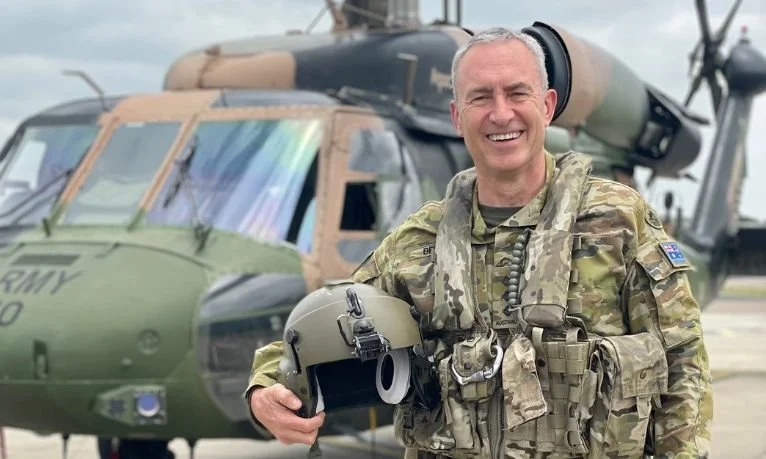
Most Australians know Mark Beretta as the sports presenter on Sunrise. Fewer know he's also Major Mark Beretta OAM, Army Reserve.
He signed up in 2019, in his late 40s, after a chance conversation at a Defence charity event. He'd wanted to serve since school — had plans for Duntroon after Year 12 — but life took him down a different road. Engineering degree. Sport commentary career. Three decades in front of a camera. Then someone told him he wasn't too old. And that was that.
Mark brought decades of communication, leadership, and performance under pressure from his media career into the Army Reserve. The Army, in turn, gave him something he says has pushed him in ways civilian life never did — the variety, the challenge, the ability to achieve things he might not have realised were possible.
That exchange is happening in thousands of workplaces across Australia, mostly without anyone noticing. Reservists juggling civilian careers with military service. Veterans carrying military-grade skills into boardrooms, classrooms, firehouses, and hospitals. The capability flows both ways, and the nation is stronger for it.
Mark is an RSL member of the Mosman sub-Branch in Sydney. He describes the League as "a great community" and says many people in or leaving Defence don't realise how good the programs on offer are. He's right. We’re working on fixing that.
Aaron Barnes
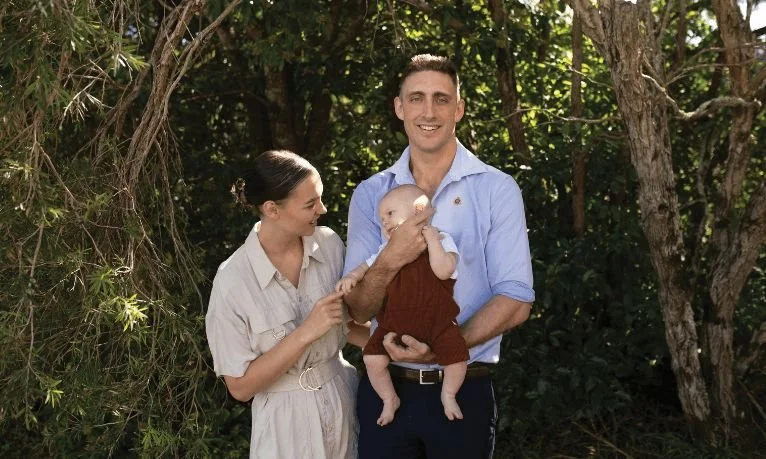
Aaron Barnes joined the infantry at 19 because — his words — "the Army looked cooler than university." He deployed to Afghanistan, pushed himself hard, and discharged at 23 with a busted knee and a question most veterans know well: now what?
The answer, it turns out, was everything.
At 30, Aaron runs a medical centre and a restaurant on the Far North Coast of NSW. He's got a baby son, Elijah. And when the Pottsville District RSL sub-Branch was about to close because the President and Vice-President were stepping down, he put his hand up for that too.
"As if I'd say no."
That line tells you everything about Aaron Barnes. But it also tells you something about what the veteran community actually looks like in 2026. It's not just the diggers in the beret at the cenotaph — though we honour every one of them. It's a 30-year-old bloke running two businesses, changing nappies, and keeping his local sub-branch alive because he believes being part of a community means contributing to it. His medical centre improves the health of his community. His restaurant feeds it. His sub-branch connects it.
He describes it like a funnel. The more responsibility you take on, the more capacity you need to build. "When everything starts to overflow, you just need to find a way to build a bigger funnel."
That's not just a philosophy for one young veteran on the north coast. That's a philosophy for the nation. Our veterans don't wait for someone else to step up. They build bigger funnels.
Michael Zemaitis
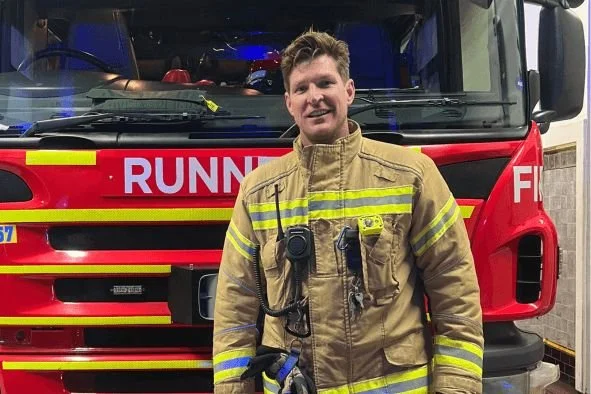
When Michael Zemaitis left the Army after years as a Commando — including six tours of Afghanistan — he didn't want to stop serving. He wanted to keep doing it closer to home.
Today, he's a firefighter with Fire and Rescue NSW, and if you ask him, it wasn't much of a leap. Same small teams. Same training discipline. Same expectation that when things go wrong, you perform. Same camaraderie.
"During my military service, I spent a lot of time overseas helping other nations in times of need. I wanted to continue that sense of service, but this time in my own community."
Fire and Rescue NSW has more than 400 current and former Defence personnel in its ranks. There's even an NSW Fire Brigades RSL sub-Branch, re-established in 2024, connecting those members with support, services and each other.
Michael Zemaitis went from clearing compounds in Uruzgan to saving lives in suburban Sydney. The uniform changed. The mission didn't.
Eamon Hale
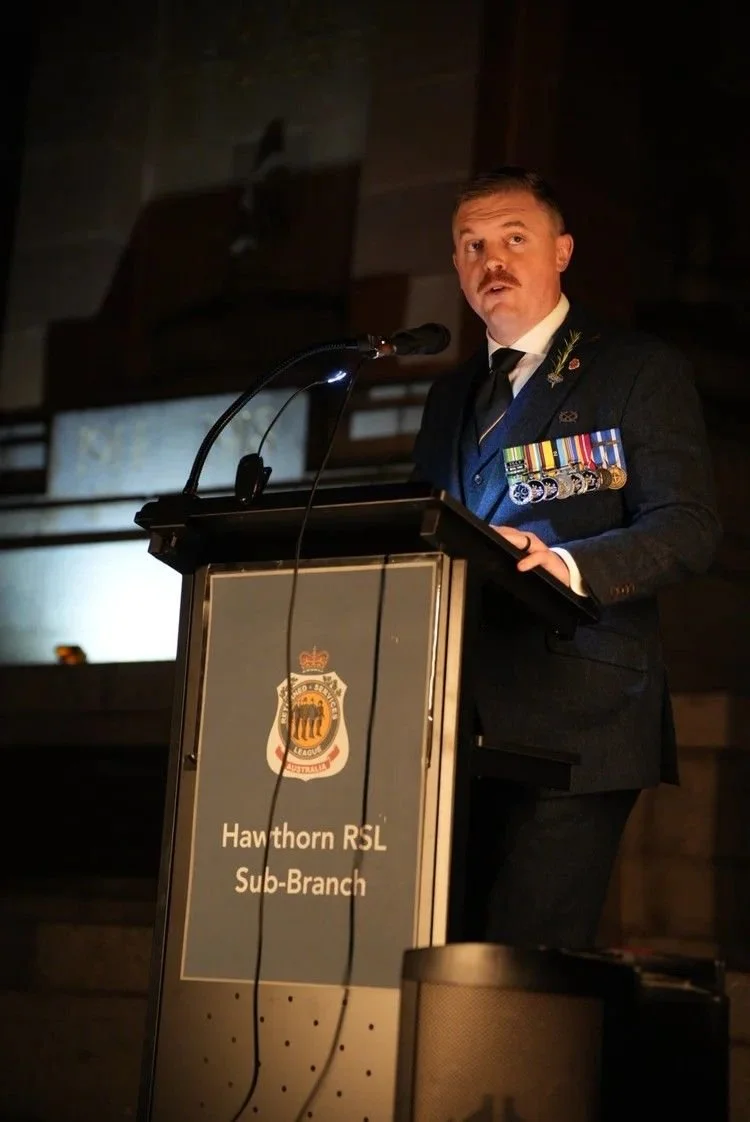
Eamon joined the Army at 17. In 2017, he left the Regular Army.
He's currently a Victoria Police officer, an Army Reservist, and a sub-branch member at RSL Hawthorn, looking after veterans and their families in his community.
Three forms of service. Simultaneously. Voluntarily.
"The walk the ADF teaches us to carry ourselves, talk, act, and especially react with control - that's really beneficial to policing. It helps create good coppers."
He's been in situations where he's had to defend himself or a partner. Confronted scenes most of us will never see. Made split-second decisions with real consequences. And he credits the Army - the discipline, the structured problem-solving, the instinct to put others first, for how he handles all of it.
He also said this about his identity in the RSL:
"In the RSL, the digger is equal and as valuable as a general. Whether you've done 40 years or 4, whether you've got a chest full of medals or only one - everyone has skills they bring to the team."
Philip Cooper
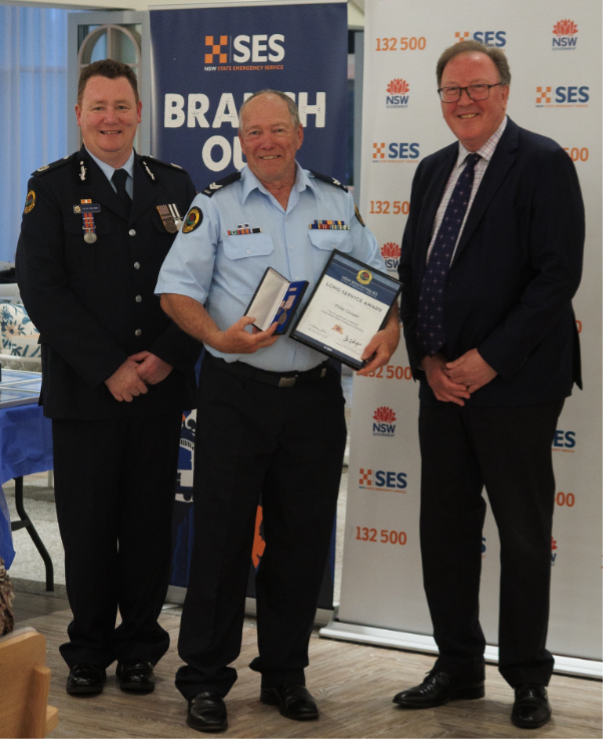
For Phil, service isn’t something you leave behind; it’s simply who you are. It's a calling.
Philip Cooper has worn many uniforms over the years, each one representing a different way to serve his country and his community.
His service began in 1967 with the Army Reserve. He volunteered for National Service in 1970 and was deployed to Vietnam in 1971. He continued to serve in the Reserves until he retired in 2015, Major Philip Cooper.
The commitment to service has shaped his life.
Philip has dedicated 27 years to the Rural Fire Service, spent 21 years with the NSW State Emergency Service, and 11 years with St John Ambulance NSW. For more than 25 years, he has also led local Clean Up Australia initiatives. Before retiring, he served as a primary school principal, shaping young lives and future generations.
His contribution doesn’t stop there.
Philip has been a dedicated member of RSL NSW for more than 50 years and continues to serve as Vice President of the Moruya Sub-branch, supporting and strengthening his local veteran community.
Across every role, two things remain constant: an unwavering commitment to others and a sense of purpose that has never left him.
ARthur Ventham
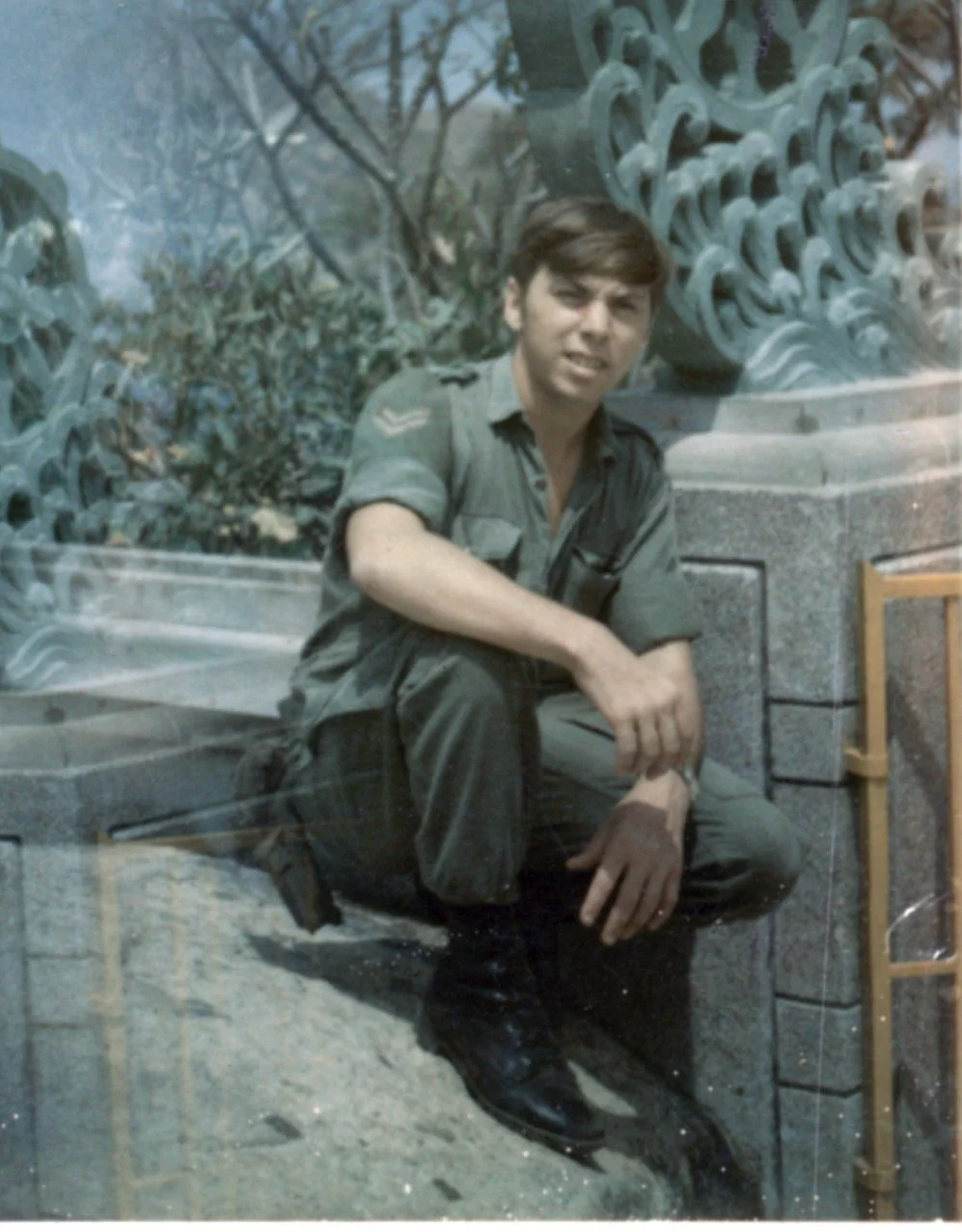
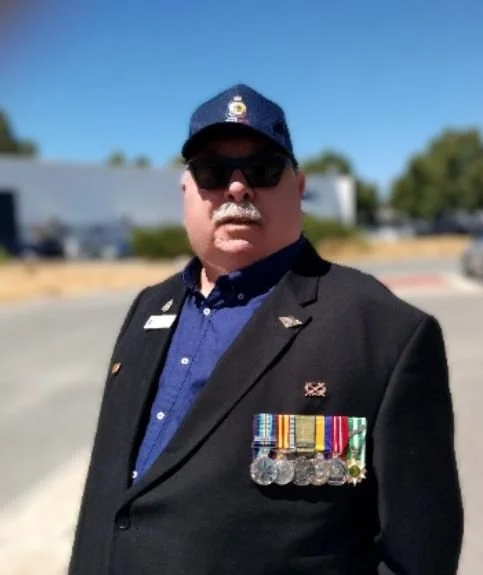
For Arthur Ventham, service didn’t end when he took off the uniform; it simply took a new form.
After 23 years in the Australian Defence Force, including service in Vietnam, Arthur has spent decades supporting the veteran community and educating the next generation on the value of service.
He was a Veterans Advocate for more than 20 years, helping lodge over 3,000 DVA claims. He prepared and managed complex compensation matters, representing veterans before the Veterans’ Review Board and the Administrative Appeals Tribunal, and supporting clients through lengthy and often distressing review processes.
His impact goes far beyond paperwork.
Arthur has supported three veterans through acute crises and helped connect them with urgent care, and he has stood beside families navigating the aftermath of loss.
His work is grounded not just in experience but in deep compassion and understanding, shaped by his experiences dealing with his own post-service injury and post-traumatic stress.
Arthur established the first Veterans Hub of its kind in Western Australia the “Northern Suburbs Veterans Support Centre” in Quinns Rocks to create a place where veterans could find connection, advocacy and support. He has also mentored the next generation of advocates, sharing his knowledge and ensuring others can continue this vital work.
He volunteered in schools as an "ANZAC Coordinator", speaking to groups of school children and providing advice and assistance to schools for ANZAC and Remembrance Day Assemblies. He also coordinated grants for building monuments of remembrance.
Although technically retired, Arthur remains a constant presence within the RSL community. A member for more than 50 years, he has served across multiple sub-branches, including Nollamara, Quinns Rocks, Wanneroo and Joondalup City, taking on a variety of roles. Today, he continues his service as a member of the Joondalup City RSL Sub-branch.
For Arthur, standing beside fellow veterans and working within his community is where he continues to find meaning and purpose.
Because for some, service never truly ends.
Paul Dickson
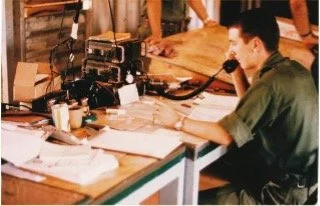
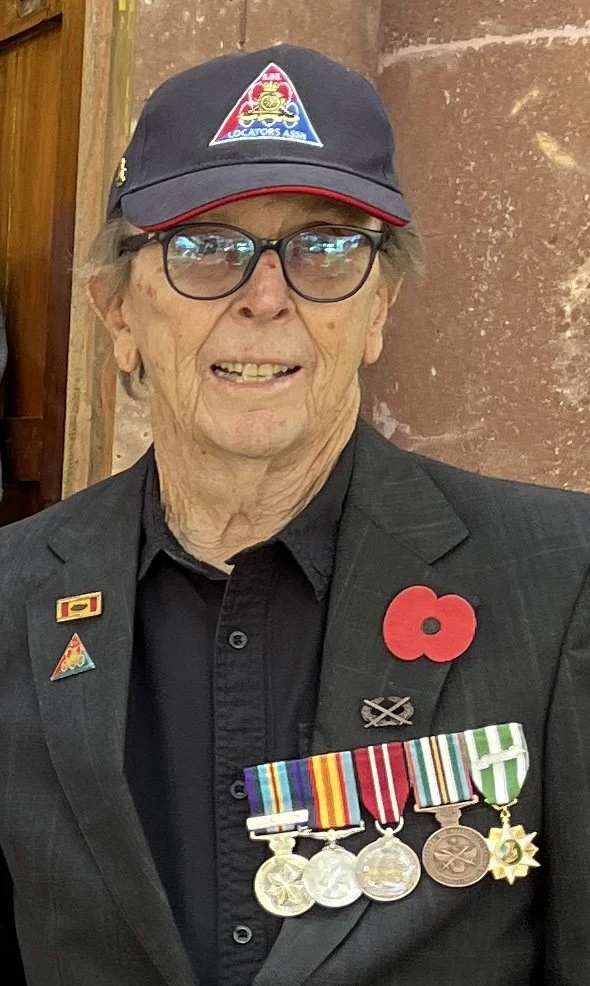
Paul Dickson served as a National Serviceman from 1966–1968 and deployed to Vietnam in 1967.
He served with Detachment 131 Divisional Locating Battery, Royal Australian Artillery, as a Gunner in Artillery Intelligence at the Artillery Tactical Headquarters in Nui Dat, South Vietnam. One of his fond memories is receiving a 21st birthday cake from his mother, still perfectly intact, that was cut into slices with a machete at Barra Winga.
During his service in Vietnam, Paul began writing and editing a unit newsletter for Detachment members called The Eyes and Ears, with the first edition published on 22 July 1967.
After he returned to Australia, he transitioned out of the Army, and his career spanned various industries.
It wasn’t until 2009, after reconnecting with former Detachment members, that he revived The Eyes and Ears as a way to re-establish contact, strengthen friendships, and preserve the unit’s history.
Over the past seventeen years, Paul has produced more than 200 editions of The Eyes and Ears (Feb 2026 edition here). He also became a founding member of the 131 Locators Association in 2010.
Even after selling up in Australia and relocating to San Miguel, Mexico, in 2011, Paul remained fully engaged with the Association, never missing a monthly newsletter. The group maintains a website and Facebook page, and Paul has encouraged members to contribute “Locator Profiles” to capture personal service histories and preserve collective memory.
Although he has now retired from producing the newsletter, he continues to run the MAILBOX—managing communications with the membership database, assisting with Honour Roll updates, searching for “Lost Locators,” coordinating Vale notices, and keeping the Facebook group active.
A Vietnam Nasho who has spent nearly two decades ensuring his mates stay connected after 60 years - That's service, full stop.