RSL Anzac Biscuits
Each year the RSL Australia National Office curates special limited edition ANZAC biscuit tins with unique designs. Inside each tin are the classic Anzac biscuits, a symbol of wartime resourcefulness and a treat enjoyed across generations. Many supporters of the RSL collect the tins and each year we receive numerous enquiries leading up to their release. A portion of the profit from the sale of the tins is donated back to the RSL to fund our work supporting the well-being of veterans and their families.
It is RSL Australia’s privilege to keep this tradition alive each year.
2026 Limited Edition Tins
In 2026, there are four distinct tin designs, honouring our history and commemorating the service and sacrifice of our service personnel.
The limited edition tins will be available at selected retailers by 1 April. Details can be found below.
Animals in the ADF
Available from Coles
The Australian Defence Force (ADF) uses animals for military roles, especially dogs for detection, tracking and apprehension. Other animals like horses, donkeys, pigeons, and camels have supported transport and communication.
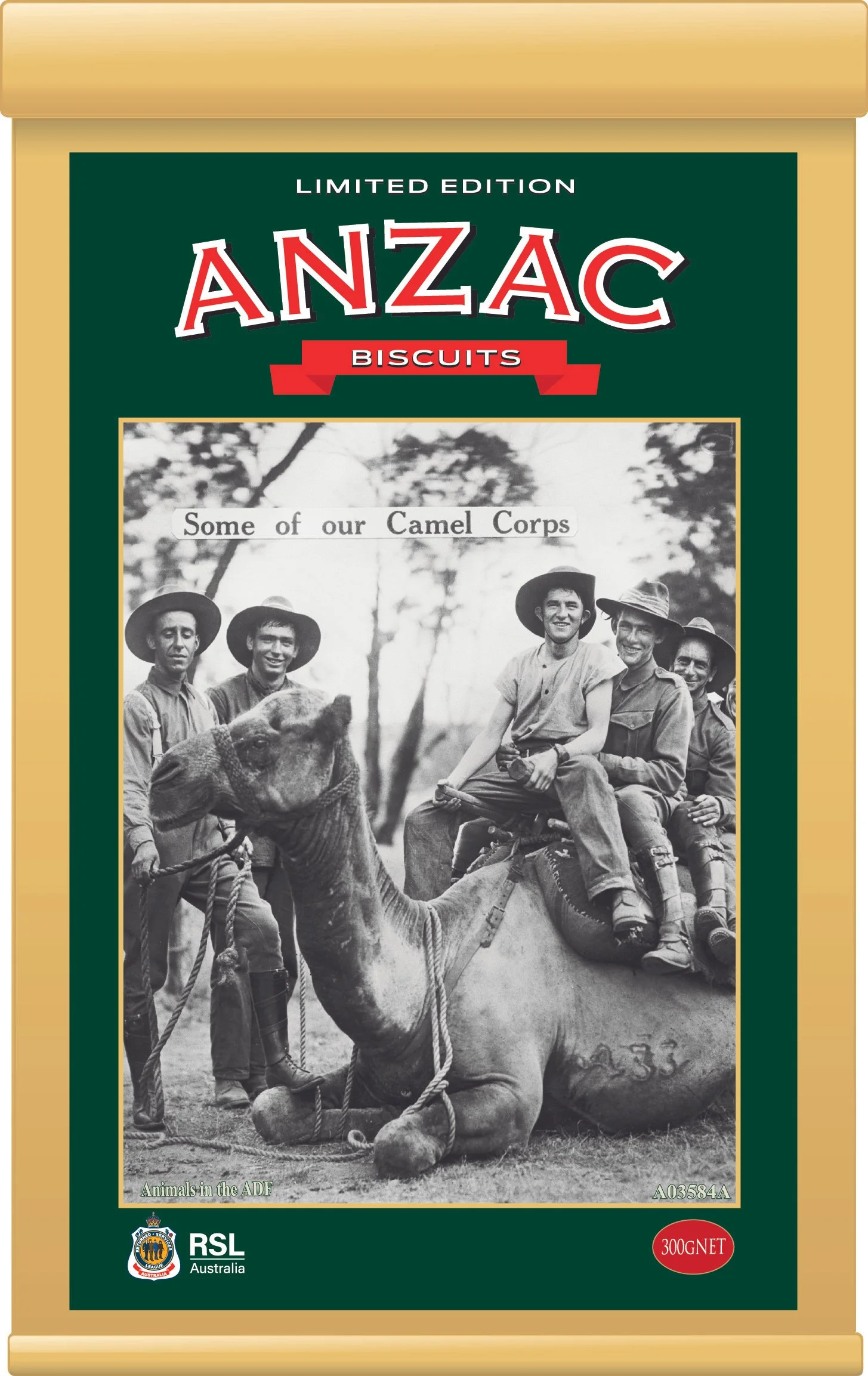
Formed in 1916, the Imperial Camel Corps Brigade included British, Australian and NEw Zealand troops. With nearly 4,000 camels, it operated in Sinai and Palestine, where camels with vital for desert patrols and water transport.
Camels, able to carry 145kg and go five days without water were key in battles like Gaza and Beersheba, helping soldiers navigate harsh desert conditions.
Photo: Menangle Park NSW 1916 - Members of the AIF, training as reinforcements for the Imperial Camel Corps (ICC) - Australian War Memorial (H16690)
Coastwatchers
Available from Aldi
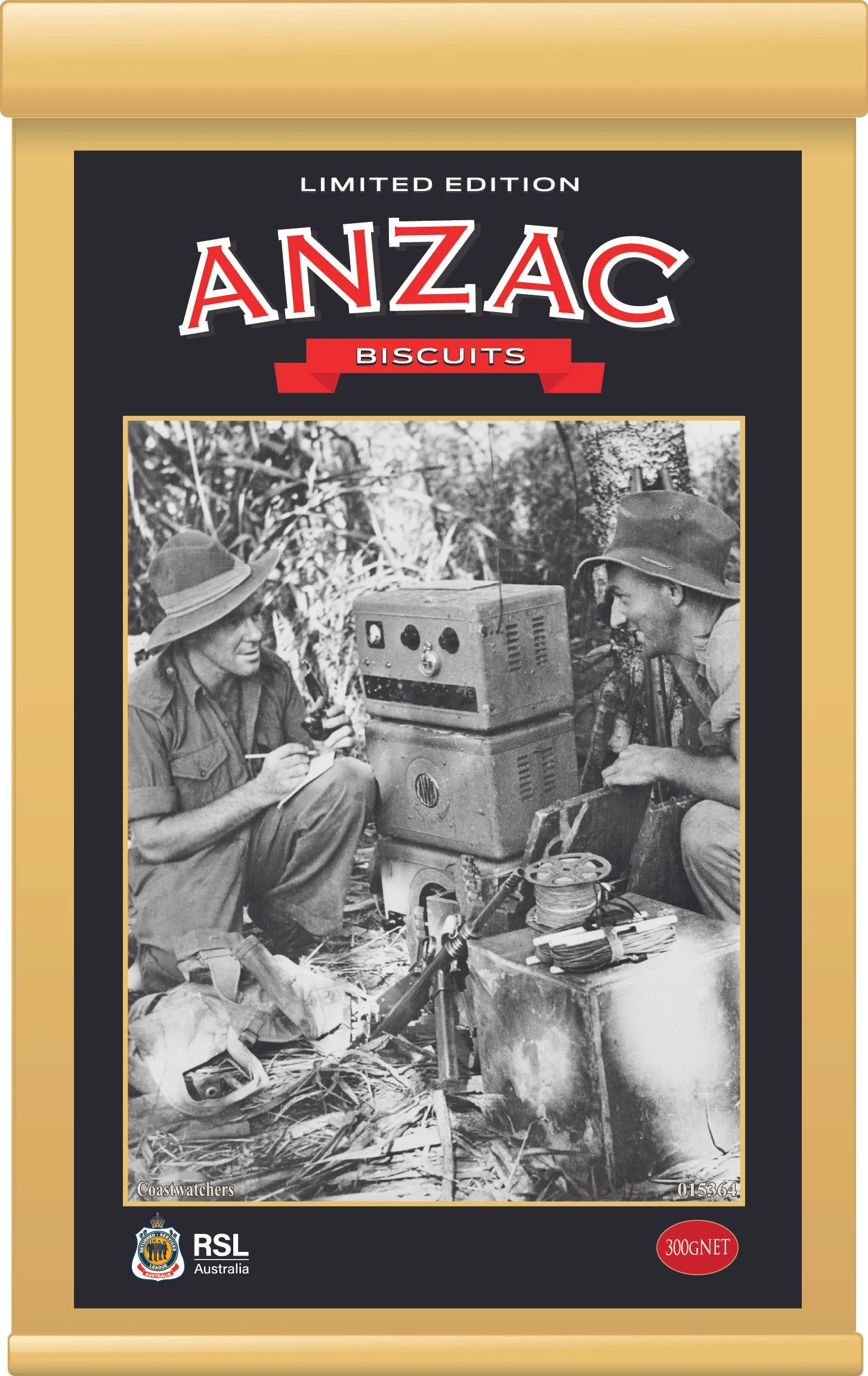
Australia’s first coast watch organisation was formed in 1919 to monitor islands north and northwest of Australia, including Papua and New Guinea. Expanded in 1935, it became a frontline defence during WWII after Japan entered the war. Coastwatchers used radios powered by car batteries charged with petrol engines. They reported hostile movements and intelligence, supported by all three services. Supplies were dropped by aircraft, and submarines or PT boats handled transport. Over 600 Coastwatchers served across Australia, New Guinea, and the Pacific. They included RAN, AIF, RAAF, WRAN, and US and British personnel. Thirty-eight Coastwatchers lost their lives.
Photo: Sergeant Frank J Parmiter of Coburg, Vic, and Corporal Ivan G Pritchard, of Kensington, NSW, spotters with the New Guinea Air Warning Wireless Company (NGAWW), at work beside their AWA radio at an observation post (or spotting station) in jungle between Nassau Bay and Mubo, in the Dobodura Sub Sector of the network. The AWA teleradio 3BZ was a civilian radio, the military use of which was limited to NGAWW and Coastwatchers, who had no other equipment available to them at the outbreak of hostilities. Parmiter was later awarded the Military Medal (MM) on 27 April 1944 - Australian War Memorial (015364)
Medical Evacuations
Available from Woolworths and selected independent stores (Selected IGA Supermarkets Australia Wide, Superbarn and Foodland stores Australia wide, Spud Shed Stores WA, Harris Farms NSW, Drakes Stores in SA & QLD, Hamper World Victoria)
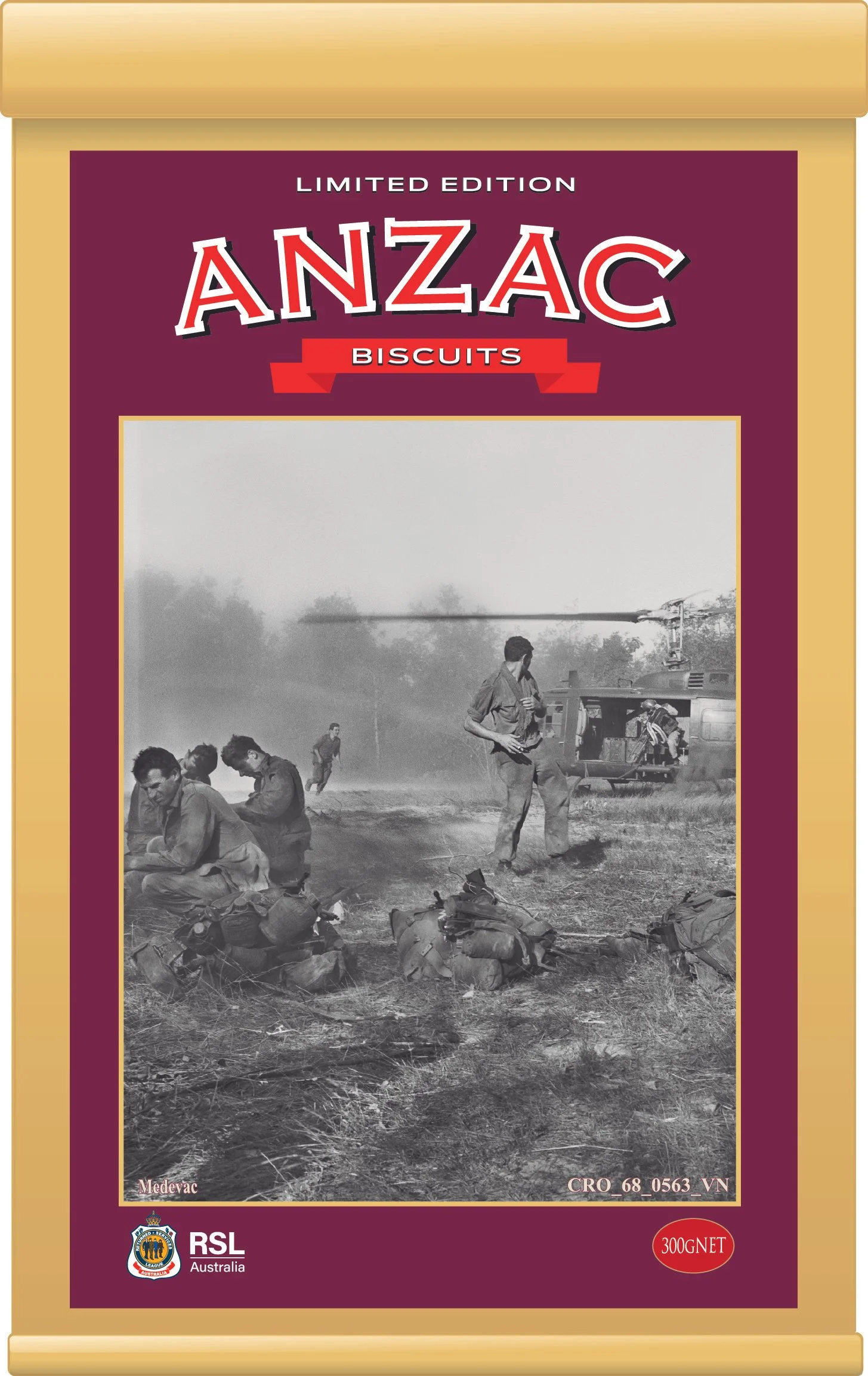
Medical evacuation flights (Medevac) are vital in emergency medicine, originally designed to evacuate wounded military personnel from combat zones. Australia's defence Medevac evolved from basic WWI services to a formal system. In 1944, the RAAF established a dedicated service, further advanced during the Korean War with Casualty Evacuation (CASEVAC) and flight nurses in the 1950s, and helicopter use in Vietnam. The photo shows wounded troops at Fire Support Base Balmoral being prepared for helicopter transport after an attack. The aircraft delivered water in jerry cans and evacuated casualties, highlighting the critical role of Medevac in frontline medical response.
Photo: Helicopter evacuates wounded soldiers from Fire Support Base Balmoral - Vietnam, May 1968 - Australian War Memorial (CRO/68/0563/VN)
Australian Nursing Service
Available from Coles and Woolworths.
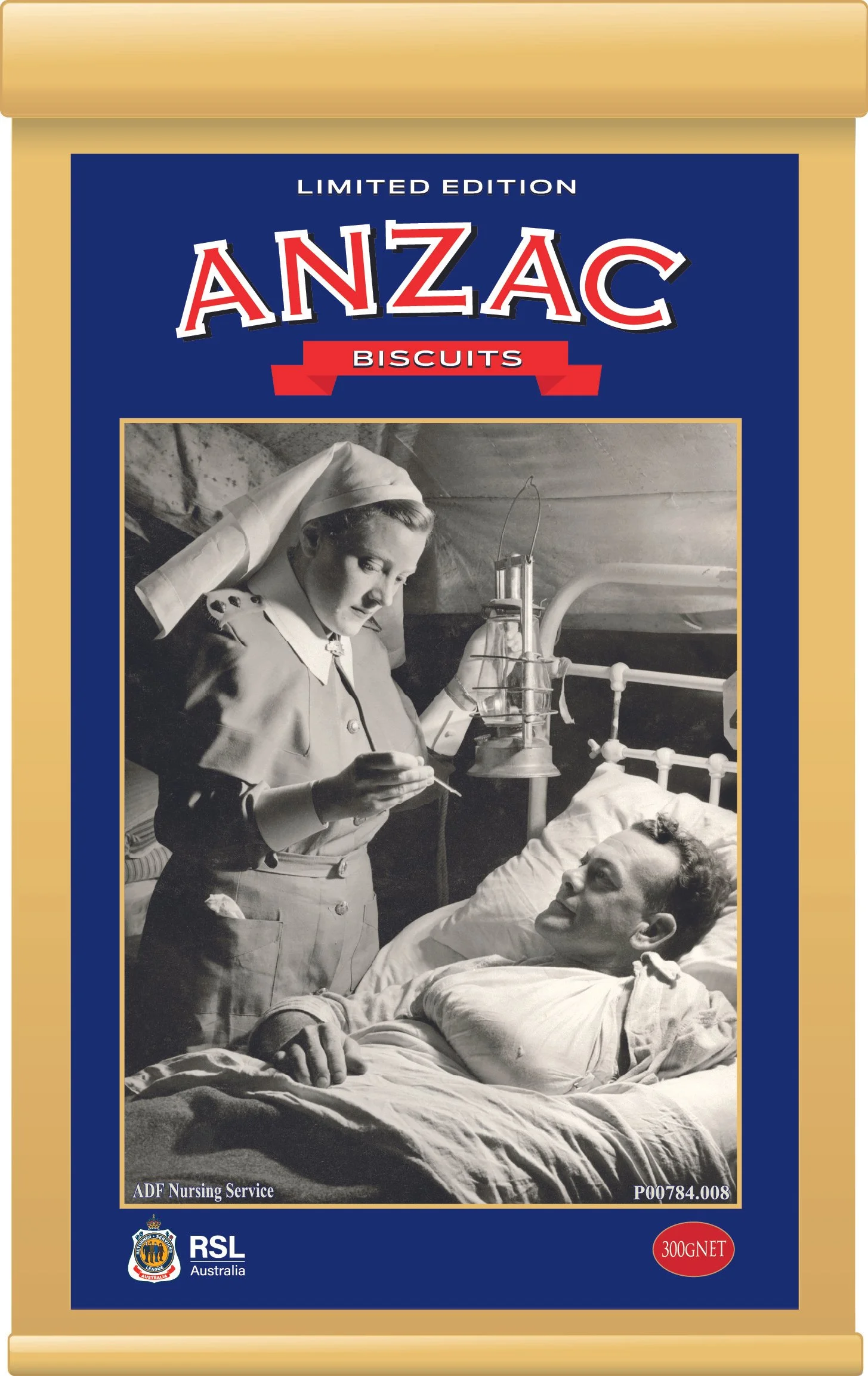
Australian defence nursing began with colonial services, evolving into the Australian Army Nursing Service (AANS) in 1902. AANS served in the Boer War, World Wars I and II and later became the Royal Australian Army Nursing Corps (RAANC). Nurses became vital to military service, facing wartime dangers. Today, military nurses serve across all branches of the Australian Defence Force, supported by advanced training and technology. Over 600 nurses are part of Joint Health Command, working in remote and high-risk areas. They provide critical care during war and disasters and have supported domestic healthcare, including during the COVID-19 pandemic.
Photo: North Queensland. c. 1944. While on night duty, a sister with the Australian Army Nursing Service (AANS) uses a thermometer to check the temperature of a patient - Australian War Memorial (P00784.008)