
There were no winners or losers, just the damaged
By Grassroots Japan-Australia Exchange Program Participant: Colin Montefiore
I had the privilege of being selected to attend the Grassroots Japan-Australia Exchange Program in 2026 as a descendant (son) of a POW who was in Camp 14 Nagasaki, 1750m from the epicentre of the Atomic Bomb.
Also selected was Barry Dwyer, a son of another POW from the Ohama coal mine camp who worked alongside the grandfather of the Albany, Tysoe family, grandfather Alfred Platt. We were accompanied by Mike Gallagher, President of RSL, Tasmania.
We were chaperoned by two delightful Japanese ladies, Youka and Inika, who smiled incessantly, ensured we had a trouble-free time, were well fed and watered and seamlessly rescheduled where needed, booking us into hotels, restaurants and all our transport. We did not need to think about anything but our trip
Day one
We made a courtesy call on the Secretary of the Japanese Ministry of Foreign Affairs. They demonstrated to us the importance of this program and how important reconciliation was to them. After the visit, our guides took us to a very traditional Japanese lunch.
In the afternoon, we visited the Australian section of Yokohama War Cemetery in Tokyo, which included a grave of Albany man Harry Tysoe, also Lance Corporal J.L. Dunn, a member of the 2/3 Machine Gun Battalion with whom my dad was captured in Java. We laid floral wreaths, and Mike said The Ode. We were joined by military members from the Australian Embassy and members of the Japanese POW Research Group. I placed crosses on Harry’s grave, that of J.L. Dunn and on the grave of the Englishman Corporal R.F. Shaw, who was killed by the bomb in Nagasaki camp 14.
Day two
Our guides provided a history lesson on Japan, and we had lunch with the Ambassador at the Australian Embassy.
In the afternoon, we spoke to the Japanese POW Research Group and university groups. They asked lots of questions and shared their experiences. It was a very open and frank discussion with an emphasis on acknowledging the past but not dwelling upon it, and working towards the future of peace and prosperity.
It was the start of my journey to understanding the war from the Japanese side.
One member of the group quietly came up to me and explained that when her father, a Japanese soldier, returned from the war, he was a very violent man who beat them all regularly. I, thankfully, could reply that my father didn’t. In fact, in the 1950s, when the wife of a friend turned up on our doorstep beaten by her husband, Dad refused to ever let the man step onto our property again.
We also theorised as to why my parents in later life took in many youths who were in need of a home, with many becoming lifetime family friends.
Dad suffered nightmares of the sinking of the Tamahoko Maru. He was being transferred to Japan with other POWs, when it was torpedoed by the American submarine USS Tang. The Tamahoko Maru sank in minutes, and the prisoners who had not perished immediately found themselves in the water in the middle of the night. They clung to wreckage and rafts. Around 0700 hours, a small Japanese whaling ship picked up the remaining prisoners. Around 560 men lost their lives that night. The surviving 211 prisoners arrived in Nagasaki and were given basic medical treatment. He suffered for most of his life from injuries received in the sinking of the Tamahoko Maru. After he had married Mum, they initially had to sleep on the floor as he would try to rescue her in the middle of the night.
We then had dinner with representatives of the Japanese Foreign Office and the Japanese POW Research Group.
Day three
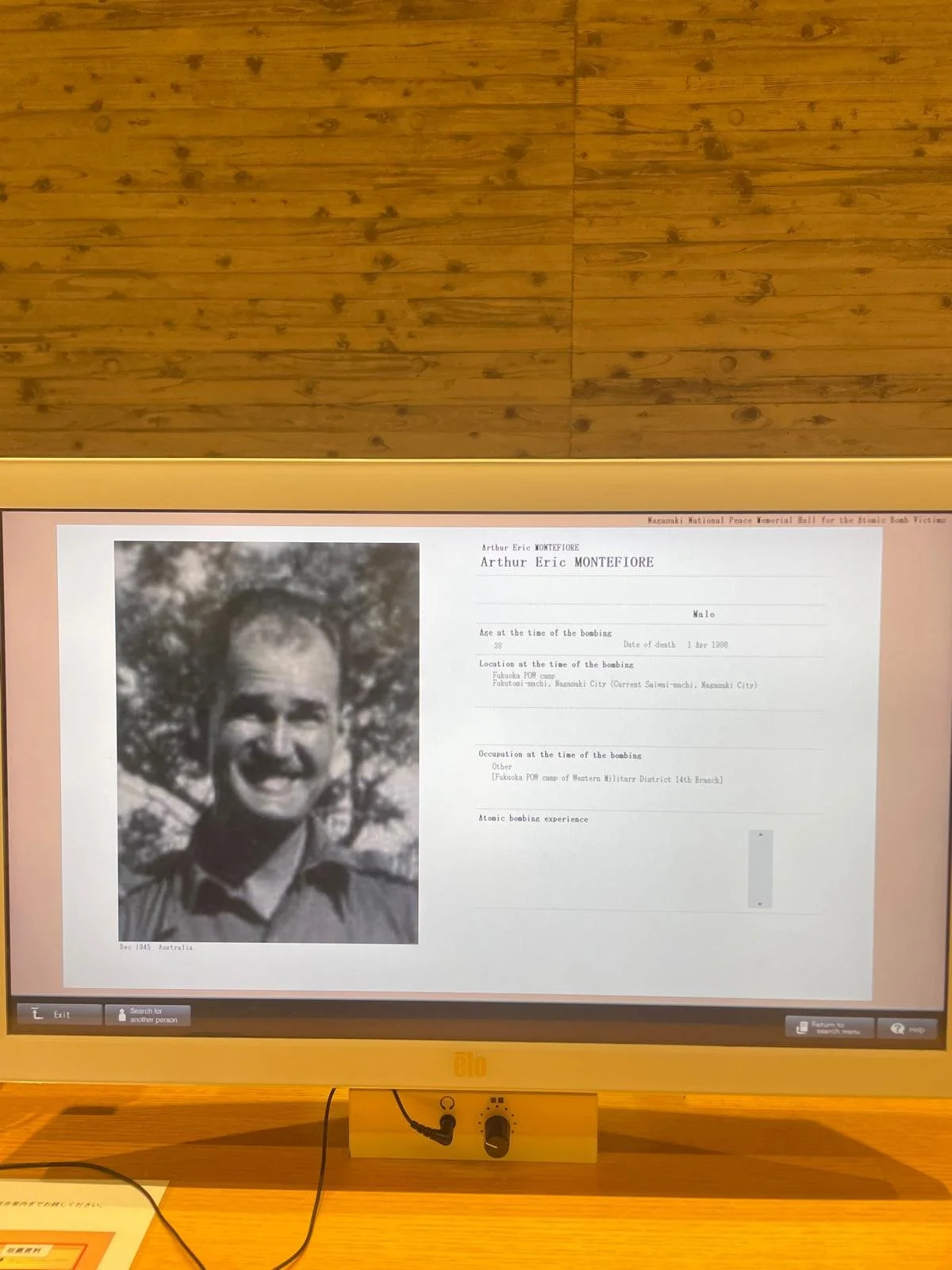
We flew to Nagasaki and visited the Atomic Bomb Museum, which includes a picture of my father in it, plus lots of other terrible photos. We also learnt how the Americans tried to suppress any reporters visiting Nagasaki to see the carnage.
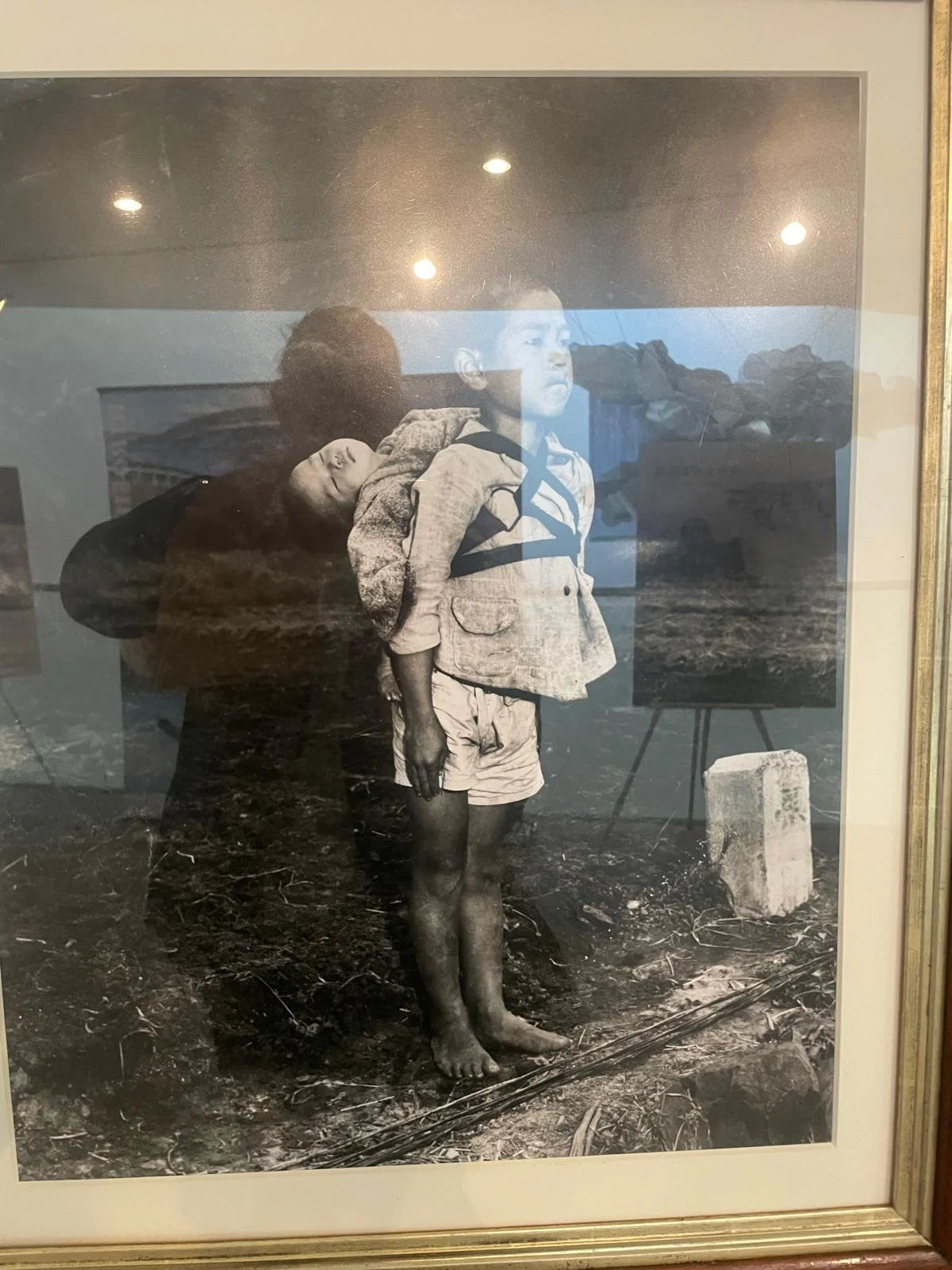
One of the most harrowing pictures was of the little boy carrying the dead body of his little brother on his back to the crematory, where they placed his body on the fire. After it had burnt, he turned and walked home. When asked why he took his brother, he said, because he couldn’t find his mother. This photo was taken by an American soldier and was not released until 1987
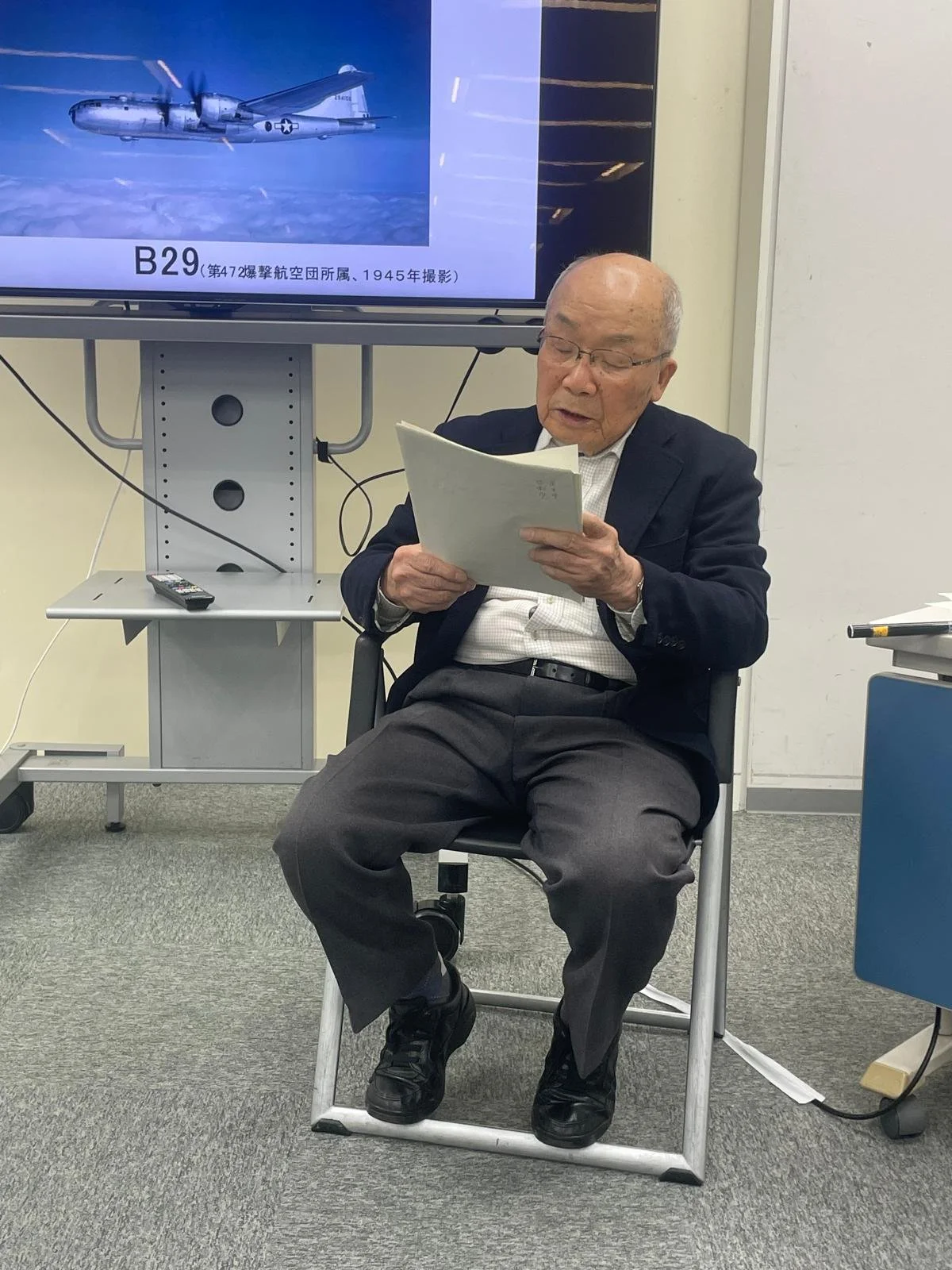
We were also given a talk by a survivor of the bomb who was ten at the time. He showed us a picture of his school that was used as a crematory and said that afterwards the children had to clean up the remains of bodies before they could recommence school. He has been working for a nuclear weapon free peaceful world ever since. His story was very insightful. Not full of hatred but of reconciliation towards peace. I shall forever be in awe of him.
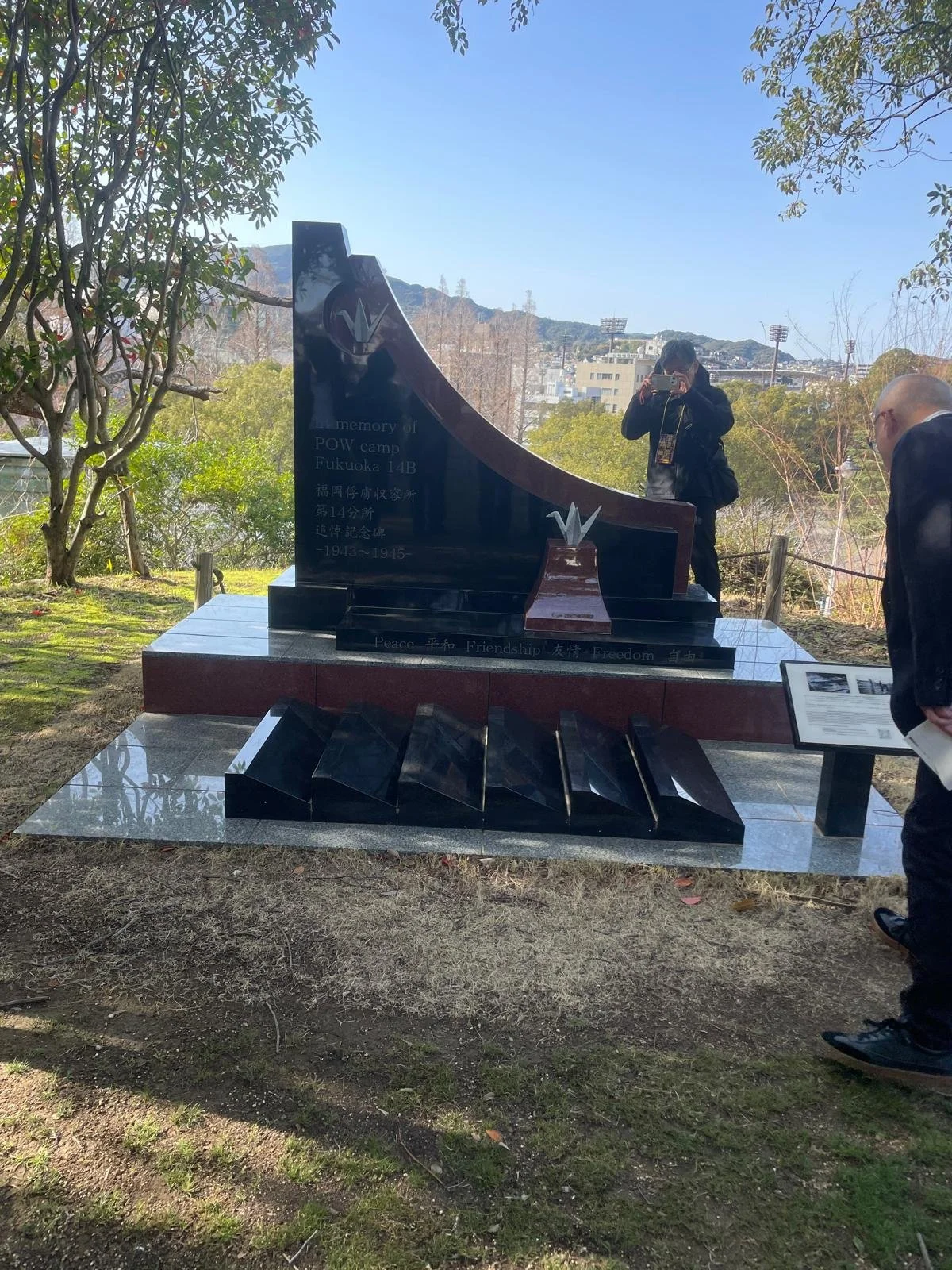
We then visited the Dutch memorial that includes the raked roof of Camp 14, which was all that remained after the atomic bomb, called “Fat Boy”. Ground Zero is marked by circular gardens. Once, again we were led by Mike to respectfully lay floral wreaths at the memorial.
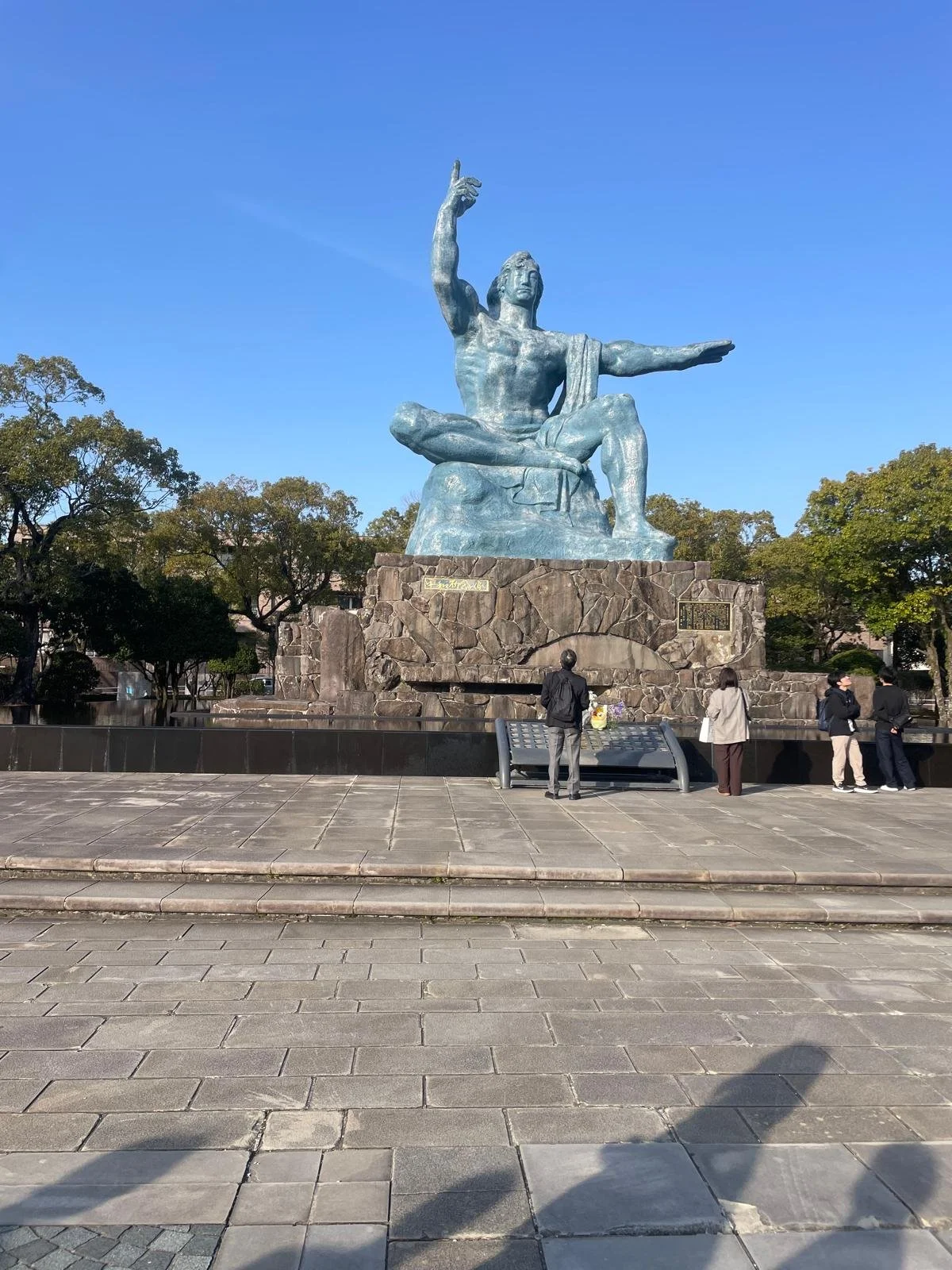
We then visited the Peace Park, which included a statue donated by the City of Fremantle.
We then went to the site of my father’s POW Camp, which was flattened by the bomb and is now a sports centre. The Aussies in the camp had sheltered in trenches they had dug. The Dutch were in open country and suffered badly.
Prior to the bomb, the POWs walked 2 hours to the Mitsubishi workshops, worked for 10 hours and then walked back to camp for 2 hours. They were given three days off a month, but later that was reduced to one day.
Dad spoke of being given extra rations by a guard when he arrived at the camp, until his wounds from being torpedoed on the way to Japan had healed.
This was a very emotional day for me. One of Dad’s reflections at the time was, “It was terrible, we were pulling bodies of children out of the ruins”.
At the time of the Atomic Bomb, the Nagasaki population was 240,000.
Instant death toll 73,884.
Wounded and in most cases slow death 74,909.
Nagasaki had the largest Christian population in Japan.
There were no War Crime Trials in Nagasaki and no convictions however, this was not the case in all the camps in Japan.
Day four
We travelled by Bullet train at speeds up to 309km, to Takeo Onsen Station, where we visited Sayo-Onoda Folklore Museum before the Honzan Coal Mine entrance and the beach, from which it went out to the sea. This was a couple of kilometres from the Ohama mine entrance, of which there is no trace left. However, we did visit the site of the Ohama POW Camp, which is still abandoned land. This was very emotional for Barry, who was standing probably where his father had stood.
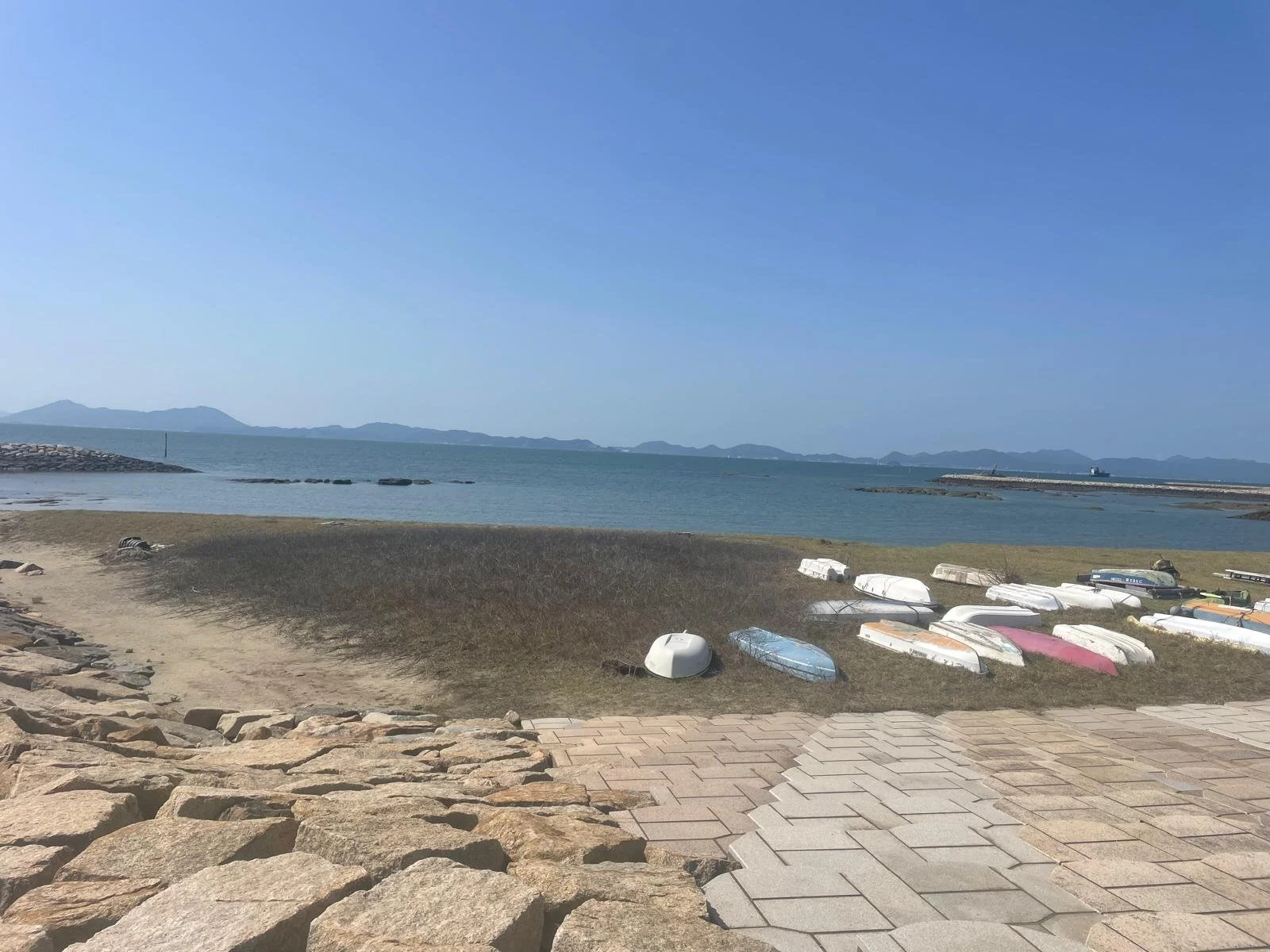
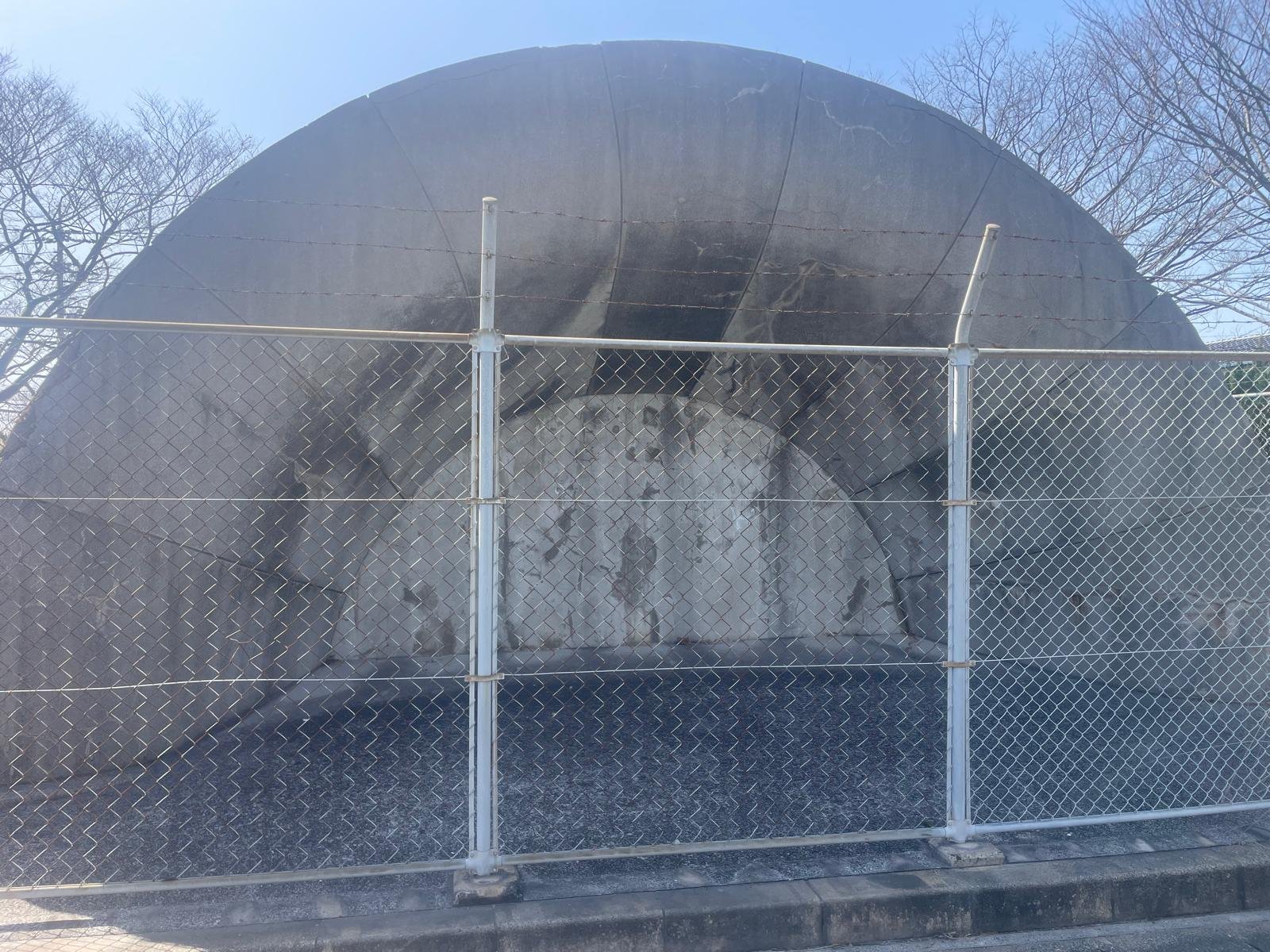
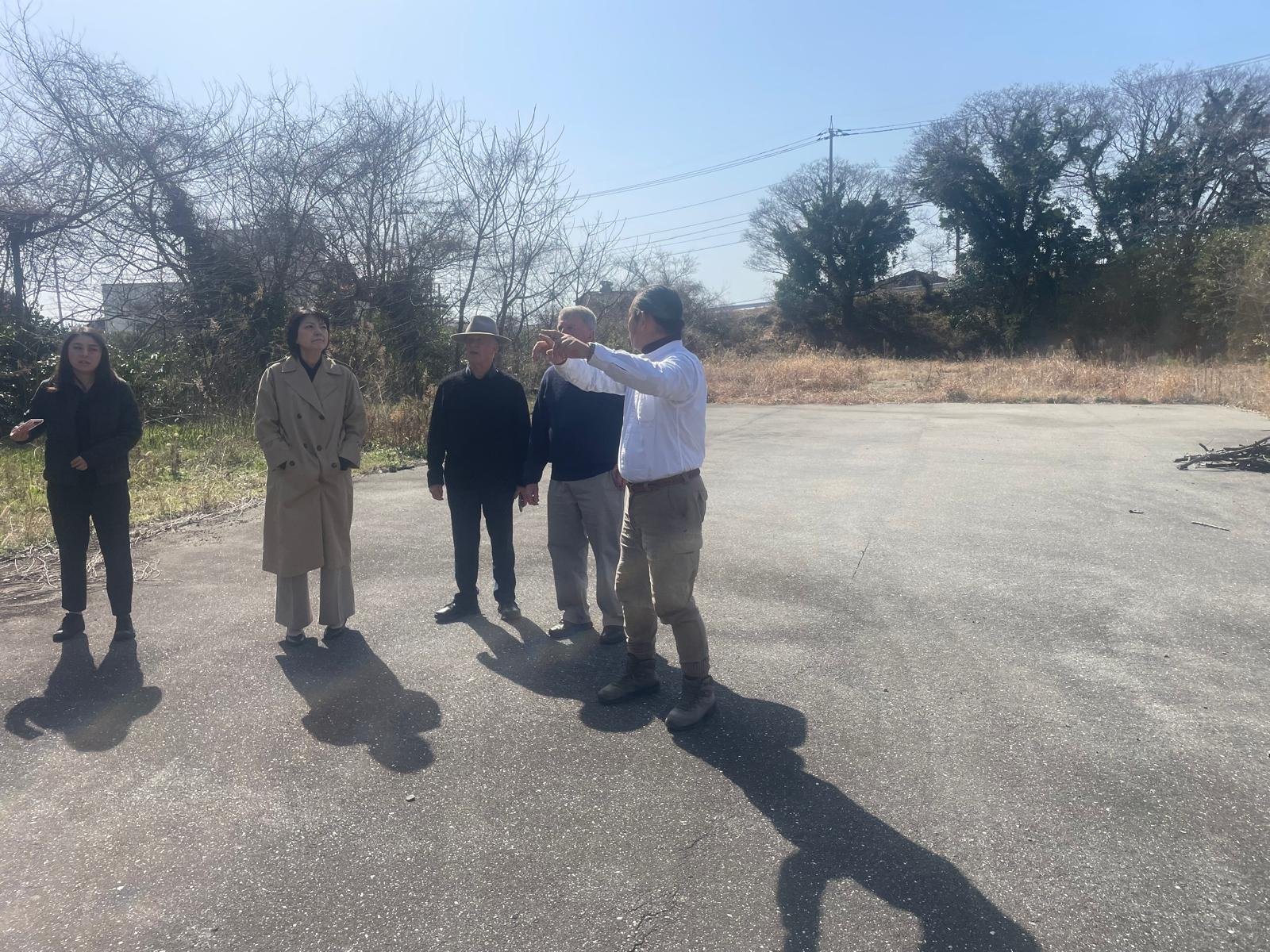
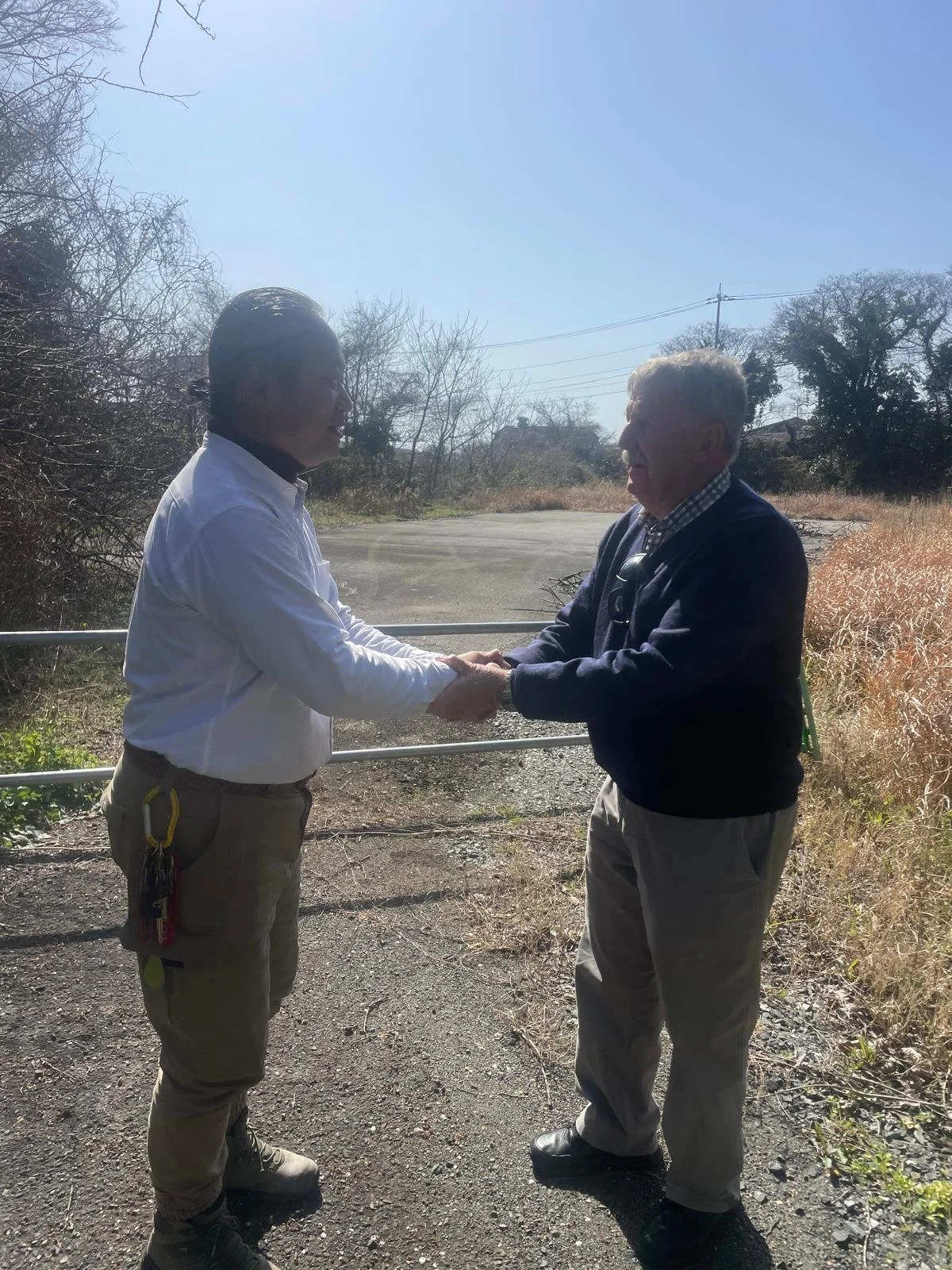
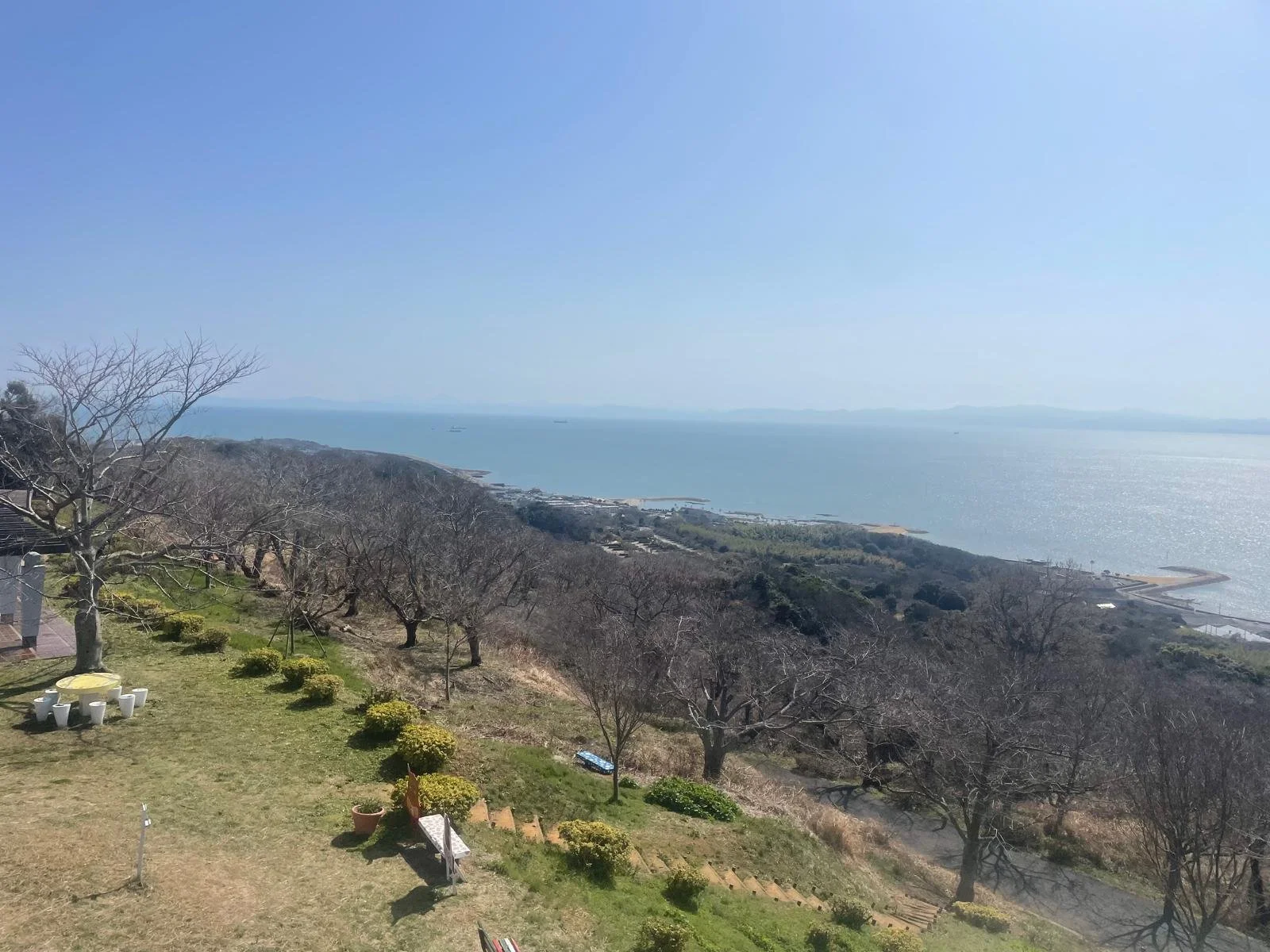
Kenji Yasushige, our local guide for the day, told us stories of the miners listening to the bombs exploding above them in the sea. We visited Kenji’s home for coffee, and he showed us a lot of information that he had accumulated on the Ohama POW camp.
Day five
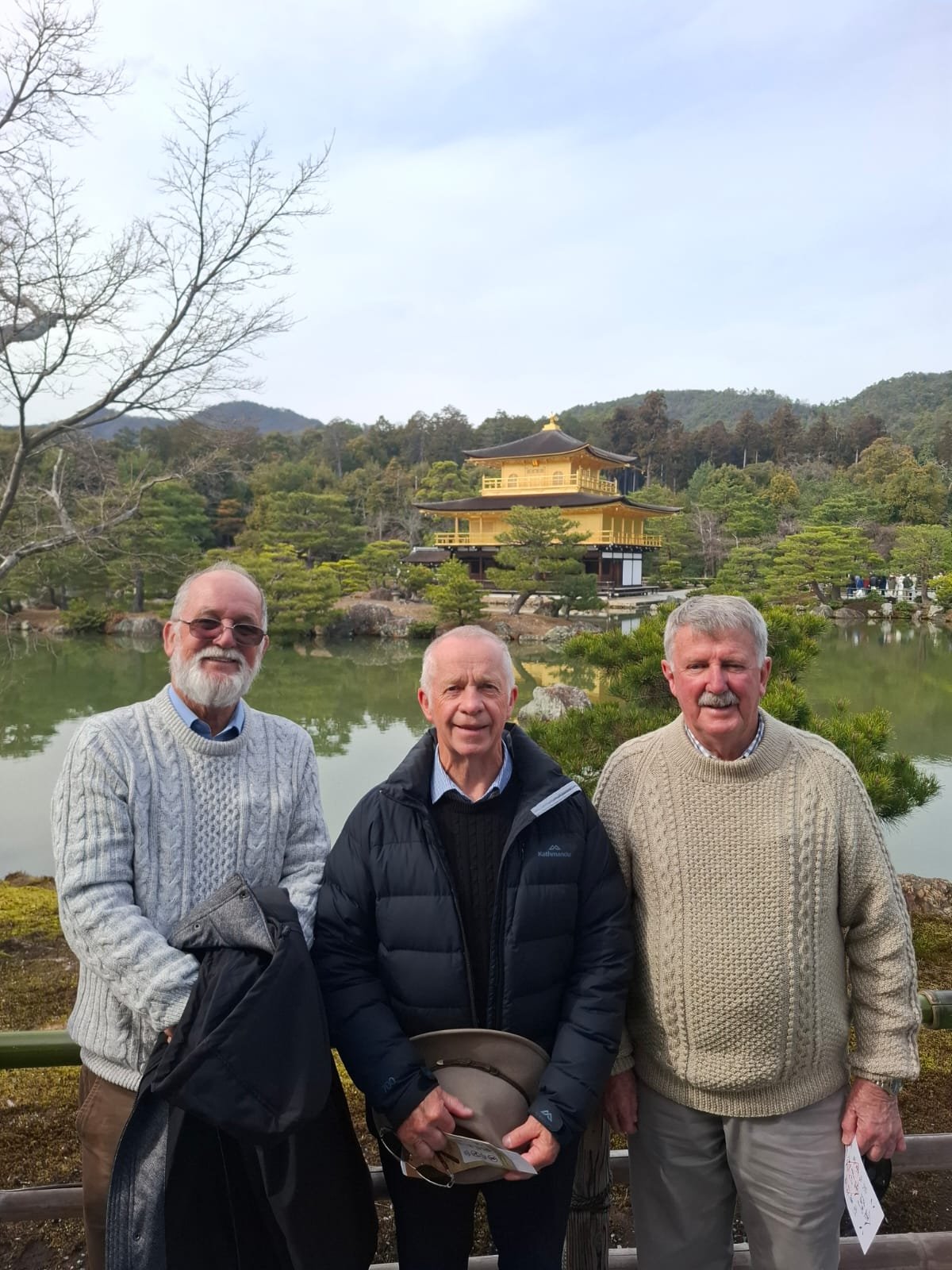
We visited the Buddhist temple of the 1001 Buddhas and the Zen Golden Temple, which dates back to the 1300s, alongside gardens of special significance. It was a day of reflection.
Day six
We fit in a visit to the Osaka Castle Museum before heading to the airport, where we said a sad farewell to our companions and wonderful guides with the hope that one day we may return.
Many of the Japanese I met asked if my attitudes had changed and I have to confess they have to a degree. I grew up seeing the results of the war on my Dad. Learning about the effect the war had on the Japanese confirmed for me that there were no winners or losers, just the damaged, some more so than others
I was pleased the researchers were not trying to gloss over their side of the war; they wanted to acknowledge the past but move on in peace and prosperity and a Nuclear Weapon free world, which was a bit strange when looking at what was happening in the world while we were there.
The atomic bomb was an abomination, and I can see why the American Nation refused to let reporters in to report on the devastation.
My father was a very lucky man, and I'm now on the trail to find out more about his 23 months in Java before his 13 months in Japan
Our guides were absolutely fantastic and professional, always with a smile on their faces. The Japanese Government clearly demonstrated how important this trip was to them, as did the Australian Government. I am forever grateful for the opportunity.
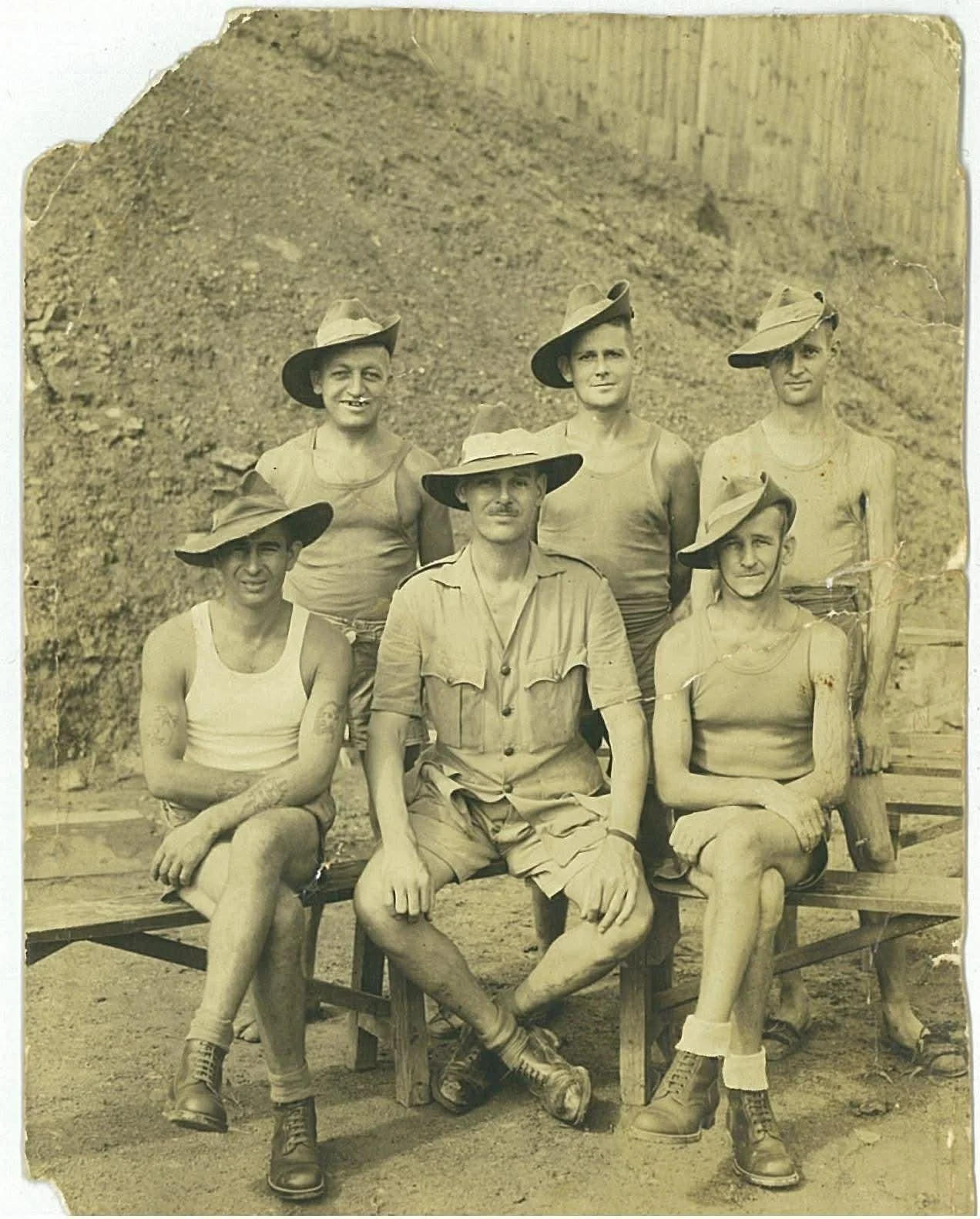
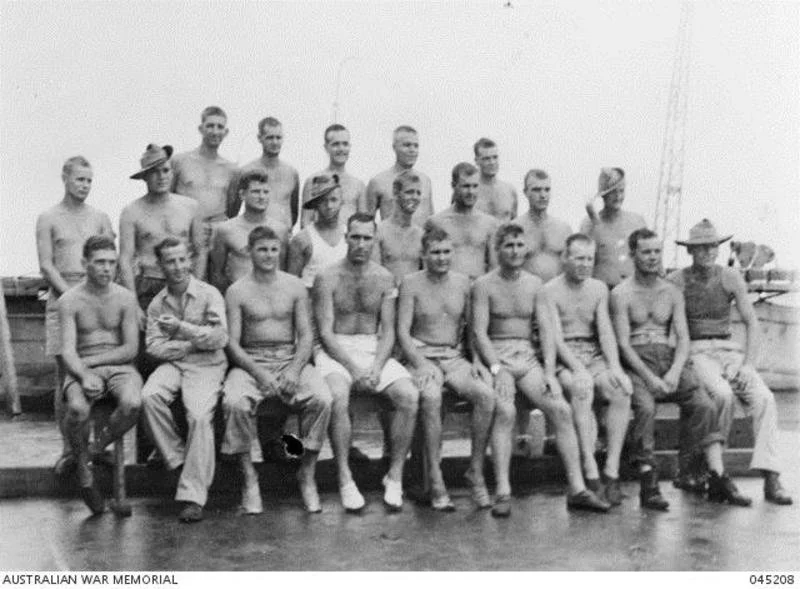
Photo one: Barry’s Dad, back row, on the right. Note the boots of the men in the front row, and the real footwear of the men in the back row. Barry said there was a machine gun pointing at them.
Photo two: The 24 POW survivors from Camp 14, Nagasaki on board the HMS Formidable. Arthur Montefiore is in the back row, third from left.