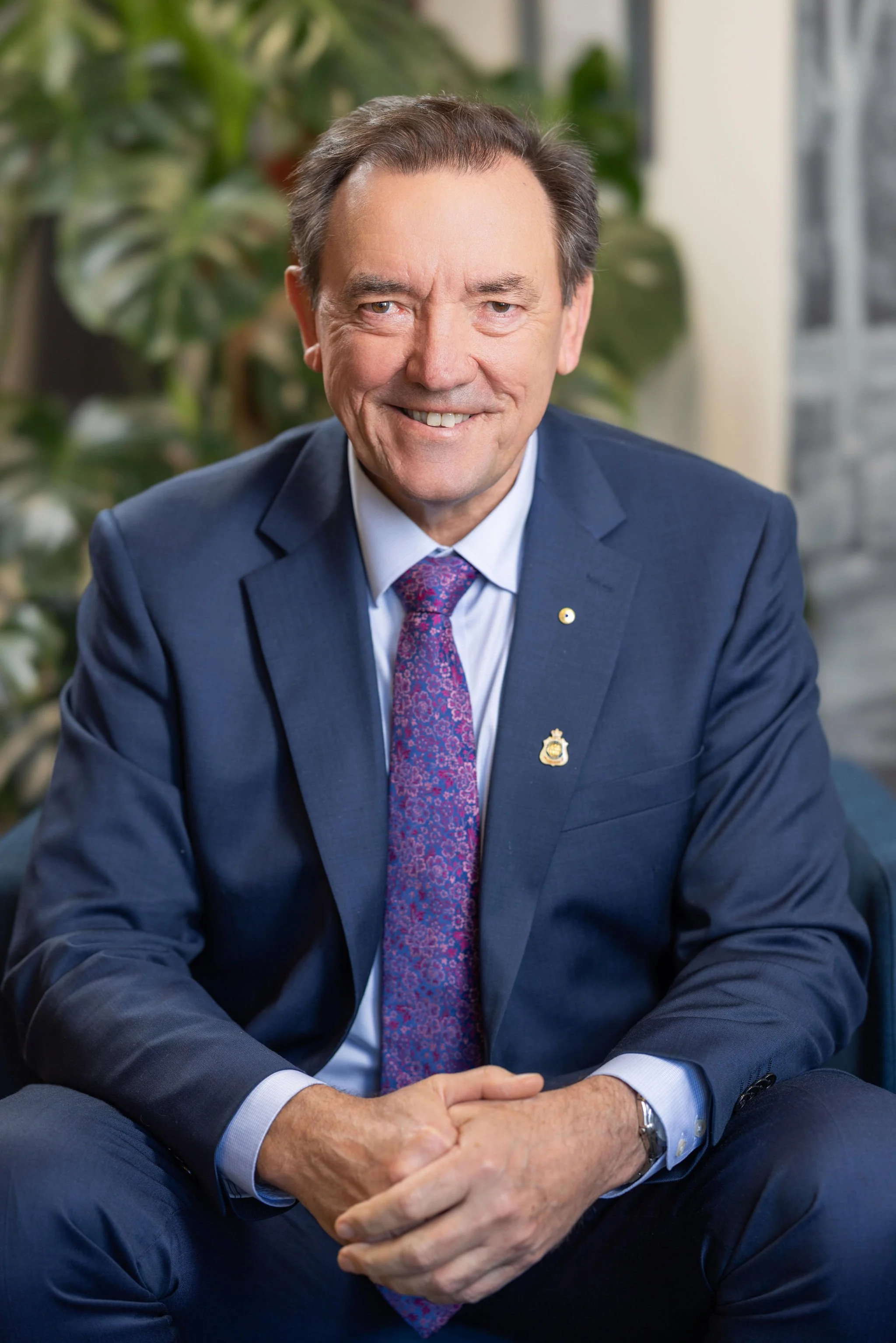
Here We Go Again — And This Time, You Don’t Walk Alone
By: Peter Tinley
I’m watching the news from the Middle East. Here we go again.
If that sounds weary, it’s because it is. But it isn’t cynicism. It’s recognition.
For those who have served there, the reaction is physical before it is intellectual. The geography flashes on screen. The names of cities. The familiar cadence of escalating statements and retaliatory strikes. We have seen this sequence before. We know its tempo. We know how quickly “rising tensions” becomes operational briefings, phone calls in the middle of the night, and someone quietly packing a bag.
You learn, over time, to read beyond the headlines. Strikes lead to responses. Responses lead to decisions. Decisions lead to deployments. For the troops, there is very little distance between a map on a television screen and “wheels up”.
Even years later, in a different life and a different role, something old and instinctive stirs when the maps come out and the analysts start drawing arrows. You begin running scenarios in your head. You think of those still serving, in my case, my own son currently in uniform. And you feel the subtle shift in the air.
Here we go again.
Today, I know I am not alone in that feeling. More than 26,000 Australians served in the Middle East across two decades of conflict. Many of them are sitting in lounge rooms around the country watching the same footage, reading the same newspapers and feeling the same quiet hum of a machine that seems to be spooling up once more.
This isn’t necessarily crisis. It isn’t breakdown. It’s something quieter and harder to explain. A change in the weather. A tightening in the chest. A scanning of the horizon. A sense that events far away may yet draw in people you know, or love, or once stood beside.
And behind every one of those veterans is someone else who feels it too.
Partners and families learned long ago to read the news not simply for information but for implication. They understand how quickly global events can become personal. When tensions rise in the Middle East, they are not just watching geopolitics unfold; they are asking themselves whether they are about to do it all again, the uncertainty, the absence, the quiet resilience that becomes routine.
So today I am not writing in my official capacity. I am writing as someone who recognises the pattern and feels the shift when it begins.
And I want to say something simple to anyone who is feeling it with me: pick up the phone.
Not necessarily to a crisis line, though those services are there, and they are vital — but to a mate. The one who was there. The one who doesn’t need the backstory. The one you have not spoken to since last Anzac Day. Send the message that simply says: “You watching this? How’s it going?”
That is what the veteran community is for.
We rightly honour service in parades and commemorations. We gather under the banner of the Returned and Services League of Australia at Anzac Day and Remembrance Day. But our community is not only ceremonial. It is most powerful in the ordinary moments. On a weeknight when something unsettles you and you need to speak to someone who understands without explanation. It is there.
If the years have pulled you away from those you served with, if transition to civilian life scattered your cohort, or if you never quite found your tribe after leaving the forces, there is a place for you. Across Australia, more than 1,100 RSL sub-branches exist not just as clubs or meeting halls, but as communities of shared experience. You do not need to have the right words. Often, you do not even need to have a membership card. Your service is enough.
We cannot control the course of global events. We cannot determine how the next chapter in the Middle East will unfold. But we can determine how we respond to one another.
Here we go again, perhaps?
But this time, no one needs to walk alone.
If you need immediate support, the Veterans’ and Families Counselling Service, Open Arms, is available 24 hours a day on 1800 011 046.
PRESIDENTIAL BIO AND STANDING NOTE
Peter Tinley AM — National President, RSL Australia
Peter Tinley served 25 years in the Australian Defence Force, including 17 years with the Special Air Service Regiment.
He was awarded the Member of the Order of Australia for service to the ADF and to veterans.
As National President of RSL Australia — the nation's largest veteran organisation — he speaks for its more than 150,000 members and the broader community of 580,000 Australians who have served.